
Some wins in the new KAMPLAN
After several months of consultation, the City has released a draft of the 2025 Kamloops Official Community Plan (aka the OCP, KAMPLAN, or Bylaw No. 68, 2025). Public feedback started with meetings of an Advisory Board, which included representatives of groups such as Transition Kamloops (Gisela Ruckert), Kamloops Naturalist Club, Canadian Home Builders’ Accosciation, Tourism Kamloops, Interior Health, Tk̓emlúps te Secwépemc, the Chamber of Commerce, and other local organizations. This was followed by a period in which city residents could offer feedback via the “Let’s Talk” platform.
The plan received 1st and 2nd reading at the November 4 Council meeting; a final opportunity for public input was provided at the December 9 meeting (there was none!) followed by THE vote. The New KAMPLAN was adopted by council almost in full, the only amendment being to delete the item relating to the establishment of a Flood Hazard Development Permit Area.
A list of ”Community Values” appears at the start of the document (p. A4), among them that Kamloops should “Support Urban Densification,” “Support the Availability of Diverse Housing Options,” “Improve Transportation and Connectivity [by investing] in road infrastructure, public transit, and pedestrian, bicycle, and trail networks…and plan for all active forms of transportation.” We hope that the City will now make decisions that align with the plan and not vote to reduce transit hours, which seems to be an option being considered to reduce taxes. In addition, the new KAMPLAN also calls for the city to “Support Local and Regional Food Systems,” and “Promote Environmental Stewardship.” These values are then addressed throughout the 260 page document. Suffice it to say that it is impossible to cover much of this in a single article!
Importantly, the plan specifies an emphasis on infill (expected to be 79% of new development) over greenfield (21%) development. New residential developments are expected to include access to parks, nature and/or open space within a 5-10 minute walk for all residents (D1). In addition, there is reference to connecting adjacent neighbourhoods through new and existing multi-use pathways and trails (page D2). The new draft plan also supports “expansion and enhancement of the city’s tree canopy to improve air quality, capture carbon dioxide, reduce heat island effects, support public health, and beautify the community”. There’s also a commitment to protect wildlife habitat, including movement corridors, at least partly to reduce human-wildlife conflict.The TNCC has a short but informative page on their website about the new wildlife corridor mapping included in the OCP. The TNCC’s support and mapping resources facilitated this win for biodiversity. Overall, the city plans to “Maintain, restore, and enhance the city’s natural environment and biodiversity”. Wow.
With respect to Climate Action, the city’s goals are to “Develop adaptive strategies and minimize Kamloops’ contributions to climate change.” They will do this by “measuring and reducing corporate and community-wide greenhouse gas emissions and investing in local climate action projects that reduce emissions and build adaptive capacity in Kamloops.” They will continue to “support the implementation of the Community Climate Action Plan…by promoting low-carbon resilient development through electrification or other renewable energy sources, urban densification, supporting alternative and zero-emission transportation options, encouraging energy-efficient buildings, managing organic waste effectively, and protecting and enhancing urban ecosystems.” They plan to “ensure that climate change impacts and resilience measures are factored into decision making regarding development and long-term planning initiatives for natural events, such as storms, droughts, flooding, wildfires, and extreme heat” and to work with groups and citizens “to identify and implement regional initiatives to increase resilience to the impacts of climate change through education, promotion, leadership, and key partnerships.” Wow again.
There are many terrific things in this plan. We’re very glad it was adopted. The new document is currently being compiled by staff and will be active and available on the website in the coming weeks.
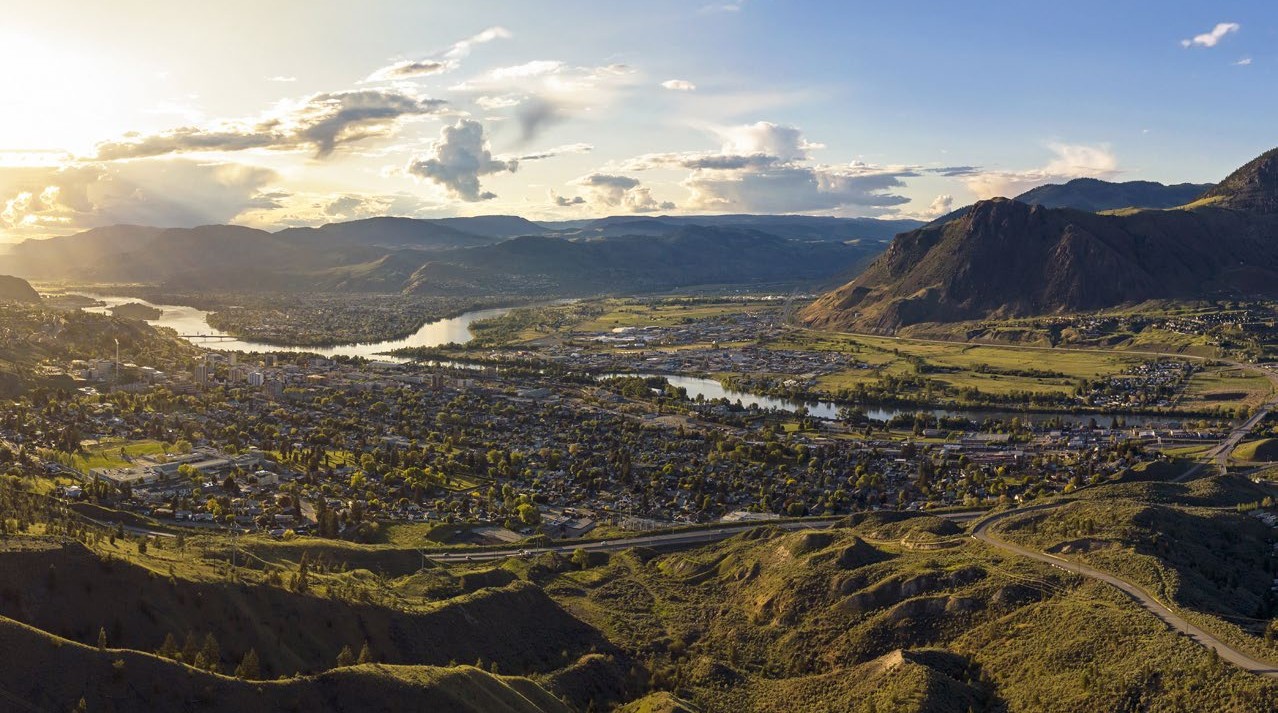
Photo: This image is cropped from one included in the City of Kamloops’ KAMPLAN document.
Transition Kamloops

Transition Kamloops is a volunteer-driven, registered not-for-profit society focused on increasing local resilience and self-sufficiency in food, water, energy, culture and wellness. We emphasize a local economy, healthy ecosystems, and grassroots community building, while reducing our dependence on fossil fuels. We believe in a better way: a community that sustains life in all its diversity, strives for equality and justice and invests in the future.
Transition Kamloops recognizes that we are living on Secwépemcul’ecw—land that was never ceded to settlers, and continues to be home to vibrant Indigenous cultures, languages, and traditions. We acknowledge the impact of colonization, forced displacement, and ongoing struggles faced by Indigenous peoples. We commit to listening, learning, and building positive relationships with Indigenous communities as we work towards reconciliation.
My Blog Posts