
Relearning gratitude for life’s foundations
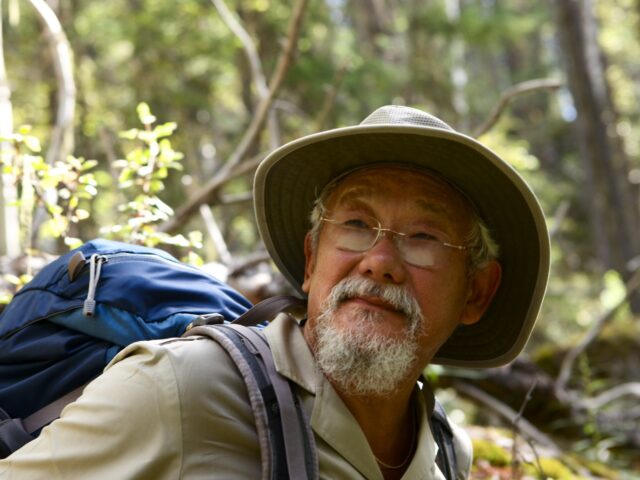
I was always proud of the houses that resulted from my time and effort even though there was absolutely no evidence of my work. (Photo: David Suzuki Foundation via Flickr)
In my youth, I worked as a carpenter for eight years, helping build houses in London, Ontario, as a framer for my uncles’ company, Suzuki Brothers Construction. A framer constructs the foundation and skeleton of a house. I would build the forms for the footings and foundation, mix and pour the concrete and, after the concrete was set, tear the forms off. We would put up the floor joists and rough flooring, then build the walls with openings for doors and windows. The ceiling joists would come next, then the rafters and sheeting over that.
Electrical wiring and plumbing would be installed after I was done, and then the plasterers and roofers would cover it all up. Once the windows and doors were hung, trimmers would add the fine details.
Painters then put on the finishing touches, and there would be no observable evidence of the work I and so many others after me had put in. Of course, at any time, modifications could be made (builders hate tearing apart their own work to make changes) and later shingles, siding and even new walls or doors could be added and repainting done inside or out. But the house was still held up and formed by all of the invisible work. That can’t be changed without major upheaval.
I like to tell this story because that’s basically our situation on planet Earth.
I was always proud of the houses that resulted from my time and effort even though there was absolutely no evidence of my work. I felt like the janitor cleaning the floors at Interface, the largest carpet tile company in the world. It was founded by former David Suzuki Foundation board member Ray Anderson, who died in 2011.
Ray was committed to making his company truly sustainable. When a television crew, doing a story on Ray and Interface, asked the janitor what his job was, he replied, “I’m helping the company climb Mount Sustainability.” He wasn’t kidding. He knew the goal of the company and was proud to be part of it, just as I’ve always felt pride in the houses I helped construct.
I like to tell this story because that’s basically our situation on planet Earth. NASA has pointed out that if we reduced the planet to the size of a basketball, the biosphere — the zone of air, water and land within which all life exists — would be as thin as a layer of plastic wrap. Within that fine planetary skin, air, water, soil and sunlight captured by plants are the very foundations of life itself. Life not only flourishes on these basic elements, all life also helps to cleanse, recycle and generate them.
Ceremony practiced by Indigenous and traditional people is how we have constantly informed ourselves of the real underpinnings of our lives and wellbeing.
Like the framing of a house or the janitorial cleanup of a company, the role of these life-support systems, which we call “nature,” has become invisible to most of humanity.
Ceremony practiced by Indigenous and traditional people is how we have constantly informed ourselves of the real underpinnings of our lives and wellbeing. In ceremony, we constantly recommit ourselves to “act in a good way” to ensure nature’s continuing abundance and generosity. We must reinculcate those practices.
We’re the only species that is fully aware of the foundation of our existence, but very recently in our evolutionary history, we have elaborated systems to shape, guide and constrain human activity while ignoring the framework that keeps us alive and healthy: air, water, soil, photosynthesis and biodiversity.
We simply take the foundation of our lives for granted. I think this is the problem we face.
We simply take the foundation of our lives for granted. I think this is the problem we face. Human numbers and industrial growth have become so great that we are undermining the basis of our existence. We must rediscover those important things that are constantly acknowledged in Indigenous ceremonies. When they give thanks to their Creator, they promise to act in a good way to ensure that nature will continue to be generous.
On sitting down for a meal, everyone in my family raises hands and says “Itadakimasu,” a Japanese expression that means “I will gratefully receive.” The simple phrase expresses gratitude and respect for the effort involved in getting the food to the table, from the farmers and cooks to the ingredients from nature — something we should feel every time we turn on a light, flush the toilet or put out the garbage.
David Suzuki

David Suzuki, Co-Founder of the David Suzuki Foundation, is an award-winning scientist, environmentalist and broadcaster. David is renowned for his radio and television programs that explain the complexities of the natural sciences in a compelling, easily understood way.
Education
As a geneticist. David graduated from Amherst College (Massachusetts) in 1958 with an Honours BA in Biology, followed by a Ph.D. in Zoology from the University of Chicago in 1961. He held a research associateship in the Biology Division of Tennessee’s Oak Ridge National Lab (1961 – 62), was an Assistant Professor in Genetics at the University of Alberta (1962 – 63), and since then has been a faculty member of the University of British Columbia. He is now Professor Emeritus at UBC.
Awards
In 1972, he was awarded the E.W.R. Steacie Memorial Fellowship for the outstanding research scientist in Canada under the age of 35 and held it for three years. He has won numerous academic awards and holds 25 honourary degrees in Canada, the U.S. and Australia. He was elected to the Royal Society of Canada and is a Companion of the Order of Canada. Dr. Suzuki has written 52 books, including 19 for children. His 1976 textbook An Introduction to Genetic Analysis(with A.J.F. Griffiths), remains the most widely used genetics text book in the U.S.and has been translated into Italian, Spanish, Greek, Indonesian, Arabic, French and German.
My Blog Posts