
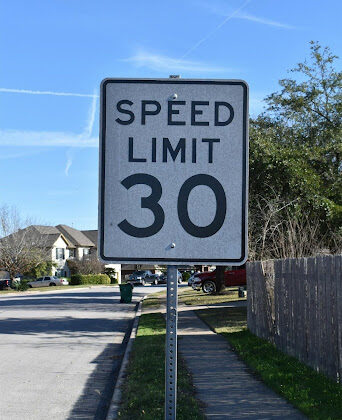
From passage to presence: How 30 km/h streets transform cities
In the modern urban condition, speed often passes as the foremost signifier of progress. We constantly strive to move faster: faster commutes, faster logistics, faster decision-making. The car horn, the traffic light, the GPS alert all serve as reminders that time is scarce and motion is valued. Yet, in the ceaseless chase for speed, something vital is lost—the delicate rhythm of human life, the built environment that invites pause, reflection, community, and memory. Slowness is not a regression. It is a reclamation of a dimension of urban living that speed often erases.
Streets as spaces of life, not just movement
The word “street” often evokes an image of a corridor for vehicles: a paved route linking A to B, transporting vehicles and people swiftly. But streets can, and should, be far more than fast lanes of transit. They can be places of pause and encounter, where children laugh under a summer sky, older residents stroll among flowerbeds, and spontaneous conversation blooms across garden fences or benches on tree-lined walkways. Consider the child chasing stray dandelion seeds on a mild spring afternoon, the elderly neighbour leaning on a post, talking quietly to a passerby, a couple walking slowly, taking in blossoms drifting across the pavement. These moments are not marginal; they are integral to the life of neighbourhoods. In such a street environment, the asphalt is not merely for the passage of vehicles but becomes a shared space of memory, interaction, soft mobility, and social cohesion. Philosopher-novelist Milan Kundera observed in The Book of Slowness:
There is a secret bond between slowness and memory, between speed and forgetting. A man is walking down the street. At a certain moment, he tries to recall something, but the recollection escapes him. Automatically, he slows down. Meanwhile, a person who wants to forget a disagreeable incident he has just lived through starts unconsciously to speed up his pace, as if he were trying to distance himself from a thing still too close to him in time. In existential mathematics that experience takes the form of two basic equations: The degree of slowness is directly proportional to the intensity of memory; the degree of speed is directly proportional to the intensity of forgetting.”(Milan Kundera, Slowness, 1995).
When we slow down, when our urban environments invite a slower pace, we allow memory to form, we invite reflection, we enable deeper layering of place and belonging. A street that invites walking, lingering, noticing, is a street that invites remembering. In this sense, the street becomes more than physical infrastructure; it becomes socio-emotional terrain. It is a place of encounter, reflection, play, rest. It gives rise to what we might term “place-attachment” and “sense of responsibility”: the recognition that this is our street, that we care for it, that we belong. When we talk about speed reduction, the discussion extends beyond accident statistics or engineering. It is about reclaiming the potential of the public realm, to transform streets from mere channels of motion into vibrant corridors of life.
Despite this vision, many residential streets remain dominated by vehicular speed. In BC local streets have default posted limits of 50 km/h. The implications of such speed regimes are profound. For parents pushing strollers, the constant hum of a vehicle past the front yard becomes both a nuisance and a latent danger. For older adults, crossing the street becomes stressful, not leisurely. Children’s spontaneous play near the curb becomes something to monitor rather than enjoy. Sidewalk-snacking benches, neighbourhood chats, unexpected pauses along fences, all shrink under the shadow of speed.
City-wide 30 km/h speed limits: from safety towards liveability, health, memory and belonging
In large cities, residents often push back against speeding culture. In 2002, a grandmother named Shirley Williams placed a sign in her front yard in Charlotte, North Carolina. The sign invited drivers to sign a pledge that read: “I promise to respect the speed limit in other neighborhoods just as I do in my own, as if the people I love most, my children, my spouse, and my neighbors, lived there.” It didn’t take long before hundreds of people signed the pledge, and the local police joined the campaign as well (Honore, 2005). Across Europe and beyond, such policies are increasingly adopted as part of a broader vision of “liveable streets,” traffic-calming, and active mobility. A review of 40 European cities showed the quantified impact of implementing city-wide 30 km/h speed limits across multiple cities (Yannis and Michelaraki, 2024):
- Crashes showed a significant decrease ranging from 9% to 46%, with an average reduction of 23%.
- exhibited a greater decline between 23% and 63%, averaging 37% fewer fatalities.
- in injuries similarly varied between 20% and 72%, with an average drop of 38%.
In Toronto, a study found that lowering speed limits from 40 to 30 km/h on local roads reduced pedestrian–motor vehicle collisions by 28%. Major and fatal injuries fell by 67% on intervention streets (Fridman et al., 2020).
While safety remains the foundational rationale for 30 km/h speed regimes, the benefits ripple further into the texture of urban life (Sauter and Huettenmoser, 2008; Bordarie, 2017; Erpecum et al., 2025):
- Liveability: Streets at slower speeds become quieter, more comfortable, more conducive to walking, playing and socialising. Residents describe reduced noise, calmer movement, and a sense of reclaiming the street as a place.
- Public health: Lower speeds encourage walking and cycling; active transport is known to reduce rates of chronic illness, mental-health load and increase social cohesion.
- Social equity: Streets that prioritise vulnerable users (children, older adults, people with disabilities) help level mobility opportunities and contribute to inclusive neighbourhoods.
- Sense of memory and place: When streets encourage pause, attention, and connection, they become living repositories of memory: children’s games recalled decades later, everyday benches that held countless conversations, and neighbourhood paths walked daily. The slower tempo enables these memory-rich experiences.
Lower operating speeds contribute to more sustainable urban environments by reducing aggressive acceleration and braking, which in turn decrease fuel consumption, emissions, and noise pollution. Studies show that applying a 30 km/h speed limit has the following results (Yannis and Michelaraki, 2024, 2025):
- Emissions decrease by 8% to 29%, with an average reduction of about 18%.
- Noise levels fall by 1.7 dB to 3 dB in the range, corresponding to an average reduction of 2.5 dB.
- Fuel consumption drops by 3.4% to 11% across cities, averaging a 7% reduction.
- Traffic congestion ranges from a potential 5% increase to a 9% decrease, with an average congestion reduction of 2%.
Carl Honore, in his best-selling book In Praise of Slow: Challenging the Cult of Speed, highlights one of the biggest myths in driving: the belief that speed is an effective way to save time. While higher speeds may shorten long, uninterrupted highway trips, the benefit is minimal for short journeys. For instance, driving three kilometers at 80 km/h takes just over two and a half minutes, whereas increasing the speed to 130 km/h saves only forty-four seconds. As Honore notes, that difference is hardly enough time to listen to a single voice message (Honore, 2005).
Success stories of lower speed limits in Canadian cities
As per the Motor Vehicle Act (1994), BC grants municipalities full authority under Section 146 to set their own speed limits by bylaw. This enables municipalities to reduce residential speeds to 30 km/h without requiring Provincial approval. Across the province, the shift toward 30 km/h residential speed limits has been gaining ground, supported by Vision Zero as the long-term goal of eliminating road fatalities and severe injuries. Over 60 municipalities in BC have adopted 30 km/h residential zones. A 2023 survey for the BC Public Health Injury Prevention Committee found that most British Columbians favour lower speeds on local streets. Sixty percent supported 30 km/h limits, and 68% believed the change would make walking and cycling safer. Support rose even higher when respondents learned that a pedestrian struck at 50 km/h has only about a 10% chance of survival, compared with roughly 90% at 30 km/h. (Pearson et al., 2025; Oakey and Pearson, 2025).
Click the link below for highlights of selected successful practices from several Canadian municipalities.
Table 1: Speed reduction policies on residential streets
Implications for effective implementation
Implementing a 30 km/h street policy requires more than changing signs. The evidence suggests that without comprehensive, complementary measures, the policy may under-perform. Key supporting measures include:
Engineering and Street Design
A change of posted speed limit alone is insufficient to ensure behavioural change. Road users respond to the “design” speed of a street: visual cues, lane width, street geometry, presence of cyclists and pedestrians, and the physical layout of the area (Figure 1). Key design tactics include:
- Traffic-calming measures: speed humps, cushions, raised crossings, chicanes, curb extensions, tree-lined narrow lanes.
- Visual narrowing of streets: reducing lane width, introducing landscaping, pedestrian islands to slow drivers’ perception of speed.
- Gateway treatments: signage and visual cues at entry points to residential zones that denote a transition to slower speed environments.
- Monitoring and iterative adjustment: recording vehicle speeds pre- and post-implementation, analysing crash/near-miss data, adjusting geometry or signage as needed.
Figure 1: Examples of crosswalks with limited visibility, before and after improvement
Engagement, Communication & Behaviour Change
Changing posted speed is less about signage and more about behaviour, culture, and acceptance. Key tools are:
- Public consultation and engagement: Engaging community members early helps build ownership. For instance, in Vancouver’s pilot sign-design contest, children and youth submitted sign designs for the 30 km/h zones, fostering community investment.
- Educational campaigns: Explaining the rationale, such as the dramatic increase in pedestrian survival probabilities at 30 km/h, helps foster public buy-in.
- Visible enforcement and feedback: Automated or mobile speed-enforcement cameras, combined with speed-display signs show drivers their speed relative to the limit. In Toronto, Automated Speed Enforcement in Community Safety Zones has reported reductions in speeding of 45% in targeted zones (Fridman et.al, 2020). Publishing results, showing reductions in speed, collisions, and changes in public behaviour contributes to transparency and trust.
- Equity of implementation: Ensuring that slower speed zones are not confined to affluent or high-profile neighbourhoods. The BC study highlighted uneven distribution of 30 km/h zones favouring wealthier areas, signalling a need for an equity-led rollout (Pearson et al., 2025).
Kamloops at a turning point: why now is the time for action
Kamloops’ neighbourhood streets present features that make a lower 30 km/h speed limit necessary. Roads tend to be wide and straight, which can lead to higher vehicle speeds. Hilly terrain increases vehicle momentum, making it harder for drivers to slow down naturally. In some locations, sidewalks are absent, requiring pedestrians to share the roadway, and visual barriers such as fences, landscaping, or parked vehicles can limit the sightlines of both drivers and pedestrians. Long blocks and the distance between crossings further reduce opportunities for safe road use, while street designs often prioritize vehicle movement over walking or cycling. Collectively, these conditions heighten the risk of collisions and underscore the need for slower, safer speeds to protect all users.
Evidence from ICBC and Census data (2021) shows that Kamloops’ position in the combined pedestrian and cycling crash index places it firmly in the middle range among cities of similar size in BC. Its per-capita crash rate (0.0025) is lower than comparable cities such as Nanaimo, Chilliwack, Maple Ridge, and Saanich, yet slightly higher than Prince George. This puts Kamloops in a moderate-risk zone: not among the most dangerous environments for people walking and cycling, but not low-risk either: see Figure 2: Per-Capita Pedestrian and Cycling Crash Rate (2021-2024) with this comparison [based on ICBC data (2024) and Census data (2021)].
To interpret this correctly, it is essential to consider that active transportation volumes affect exposure to risk. Cities with stronger walking and cycling cultures and infrastructure inevitably record more crashes simply because more people are on the street. This context matters for Kamloops, which currently has a 6% active transportation commute rate, noticeably lower than the BC provincial average of 8.5% and behind peer cities like Penticton and Saanich, possibly suggesting that its moderate crash rate occurs under relatively low walking and cycling volumes: see Figure 3: Active Transportation Commute Rate (2021) [based on Census data (2021)].
Taken together, these patterns show that Kamloops is currently positioned in a critical moment of transition. The city is adopting and implementing an Active Transportation Plan, and a gradual shift toward more walking and cycling is expected over the coming years. As travel behaviour changes, exposure to risk will naturally increase unless safety measures are strengthened. This makes the present moment especially important: Kamloops has the chance to shape safer streets before higher levels of active transportation place more risk on its local network. Establishing city-wide 30 km/h zones would reduce collision severity, support the city’s active transportation goals and vision zero strategy and action plan, and help ensure that growth in walking and cycling does not come with an increase in injuries.
The policy of a 30 km/h speed limit on residential streets is both humble and profound: humble because it is about a number on a sign; profound because it touches health, equity, memory, community and urban form. For a city like Kamloops, adopting slower local speed limits is a statement about what the city values: presence over passage. It is the recognition that streets are public places as much as pathways. By prioritising 30 km/h residential zones, the city affirms that its worth is not measured by how fast we move through it, but by how deeply we live within it.
References
Bordarie, J. (2017). Public Policy of Urban Mobility: Impact of the History and Practices on Young Drivers’ Social Representation of 30 km/hr, Journal of Nonprofit & Public Sector Marketing, (29):2, 211-234, DOI: 10.1080/10495142.2017.1326346
Boivin, J. (2019). Rossland introduces new traffic bylaw, Rossland News. available at: https://www.rosslandnews.com/news/rossland-introduces-new-traffic-bylaw-4943558 Accessed November 8, 2025
City of Calgary, Neighbourhood speed limits available at: https://www.calgary.ca/roads/safety/residential-speed-limits.html?utm_source=chatgpt.com Accessed November 8, 2025
City of Duncan Notice (February 1, 2024) available at : https://duncan.ca/2024/02/press-release-default-speed-limit-lowered-to-30-kilometres-per-hour Accessed November 8, 2025
City of Surrey Council Report (April 30, 2025) available at CR_2023-R044.pdf Accessed November 8, 2025
City of Vancouver Council Report (April 29, 2025). Available at: Report – Safer Slower Streets – Standing Committee on Policy and Strategic Priorities – July 9 , 2025, Accessed November 8, 2025
City of Victoria Council Report (July 3, 2025) Available at: Microsoft Word – Report_Amendment Bylaw for Streets and Traffic Bylaw Accessed November 8, 2025
District of Saanich Council Report (June 4, 2022) available at this link. Accessed November 8, 2025
Erpecum, C., Braver, N., Bornioli, A., Veldhuizen, R., Garcia-Gomez, P., M¨olenberg, F. (2025). How do decision-makers justify the implementation of 30 km/h interventions in the Netherlands? An analysis of 47 traffic order documents, Case Studies on Transport Policy (21), 101510
Fridman, L., Ling, R., Rothman, L., Soleil Cloutier, M., Macarthur, C., Hagel, B., Howard, A (2020). Effect of reducing the posted speed limit to 30 km per hour on pedestrian motor vehicle collisions in Toronto, Canada – a quasi experimental, pre-post study, Journal of BMC Public Health, pp 20-57. https://doi.org/10.1186/s12889-019-8139-5
Gonzalo-Orden, H., Rojo Arcea, M., Linares Unamunzagaa, A., Aponte, N., Pérez-Acebo, H. (2021). Why is necessary to reduce the speed in urban areas to 30 Km/h?, Transportation Research Procedia 58 (2021) 209–216, DOI: 10.1016/j.trpro.2021.11.029
Honore, C. (2005). In Praise of Slow: Challenging the Cult of Speed, Vintage Canada
ICBC, Crash involving pedestrian and Cycling – 2020 to 2024, available at Statistics Accessed November 1, 2025
Interior Health Report (November 28, 2022) available at: Vision Zero grant makes 100 Mile House pedestrians safer Accessed November 8, 2025
Kundera, M. (1995). Slowness, Harper Perennial.
Motor Vehicle Act (1994), Section 146.
Oakey , M., Pearson, L (2025) Enablers Of 30km/H Speed Limit Zones: Perspectives From British Columbia, CARSP News April 27, 2025, accessible at: ENABLERS OF 30KM/H SPEED LIMIT ZONES: PERSPECTIVES FROM BRITISH COLUMBIA – The Canadian Association of Road Safety Professionals (CARSP)
Pearson, L., Oakey, M., Nelson, B., Karbakhsh, M., Karmali, S., Beck, B (2025), Cross-country policy comparison of 30 km/h speed limits, Cities & Health, DOI: https://www.tandfonline.com/doi/full/10.1080/23748834.2024.2439642
Richter, B (2023), North Van drops Edgemont Village speed limit to 30 km/h, available at: https://www.nsnews.com/local-news/north-vancouver-edgemont-speed-limit-6354763 Accessed November 8, 2025
Sauter, D. and Huettenmoser, M., (2008). Liveable streets and social inclusion. Urban design international, 13 (2), 67–79. Focus on Geography Series, 2021 Census – Kamloops (Census subdivision) Accessed November 1, 2025
Yannis, G.; Michelaraki, E. (2024). Review of City-Wide 30 km/h Speed Limit Benefits in Europe. Sustainability 2024, 16, 4382. https://doi.org/10.3390/su16114382
Yannis, G.; Michelaraki, E. (2025). Effectiveness of 30 km/h speed limit – A literature review, Journal of Safety Research 92: 490–503. https://doi.org/10.1016/j.jsr.2024.11.003
Photo credit: Unsplash
Transition Kamloops

Transition Kamloops is a volunteer-driven, registered not-for-profit society focused on increasing local resilience and self-sufficiency in food, water, energy, culture and wellness. We emphasize a local economy, healthy ecosystems, and grassroots community building, while reducing our dependence on fossil fuels. We believe in a better way: a community that sustains life in all its diversity, strives for equality and justice and invests in the future.
Transition Kamloops recognizes that we are living on Secwépemcul’ecw—land that was never ceded to settlers, and continues to be home to vibrant Indigenous cultures, languages, and traditions. We acknowledge the impact of colonization, forced displacement, and ongoing struggles faced by Indigenous peoples. We commit to listening, learning, and building positive relationships with Indigenous communities as we work towards reconciliation.
My Blog Posts