
Nature-Friendly Yards design charrette: starting with how we live
Cover photo by Jesse Ritcey
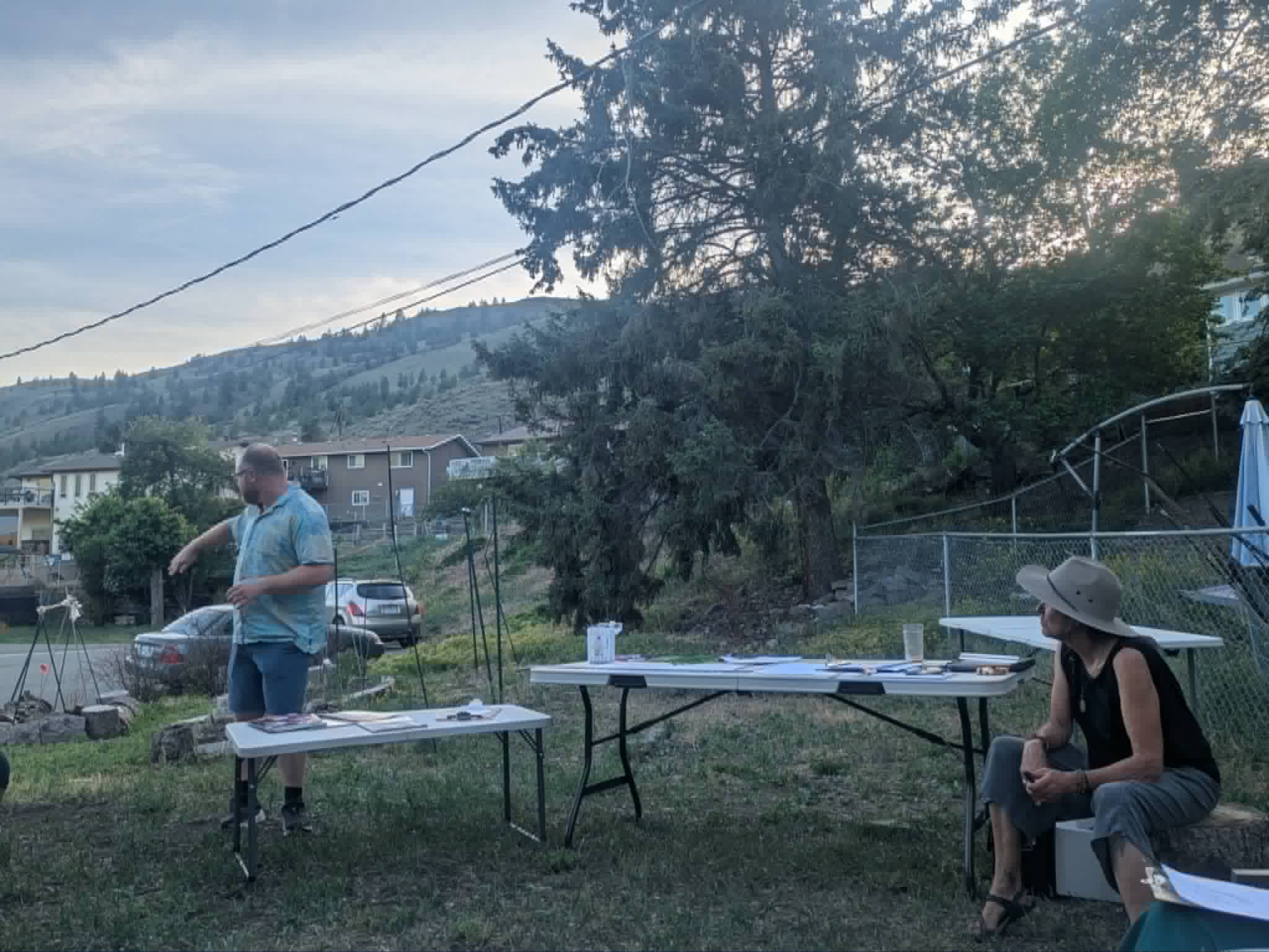
On May 27, 2026 Transition Kamloops hosted its first in-person Nature-Friendly Yards design charrette in the yard outside my home. It was facilitated by Shelaigh of EveryOne’s Eden Regenerative Land Design and supported by the Kamloops Naturalist Club. Residents from across Kamloops gathered to learn about the early stages of landscape planning. Together they explored how private yards can support biodiversity, strengthen neighbourhood connections, and contribute to a more resilient urban landscape.
The Charette
The charrette provided the participants with an opportunity to see how a nature-friendly yard design process begins. Rather than focusing immediately on plants or detailed landscape plans, the evening focused on understanding how a space is currently used, identifying existing strengths and challenges, and establishing priorities to guide future design decisions.
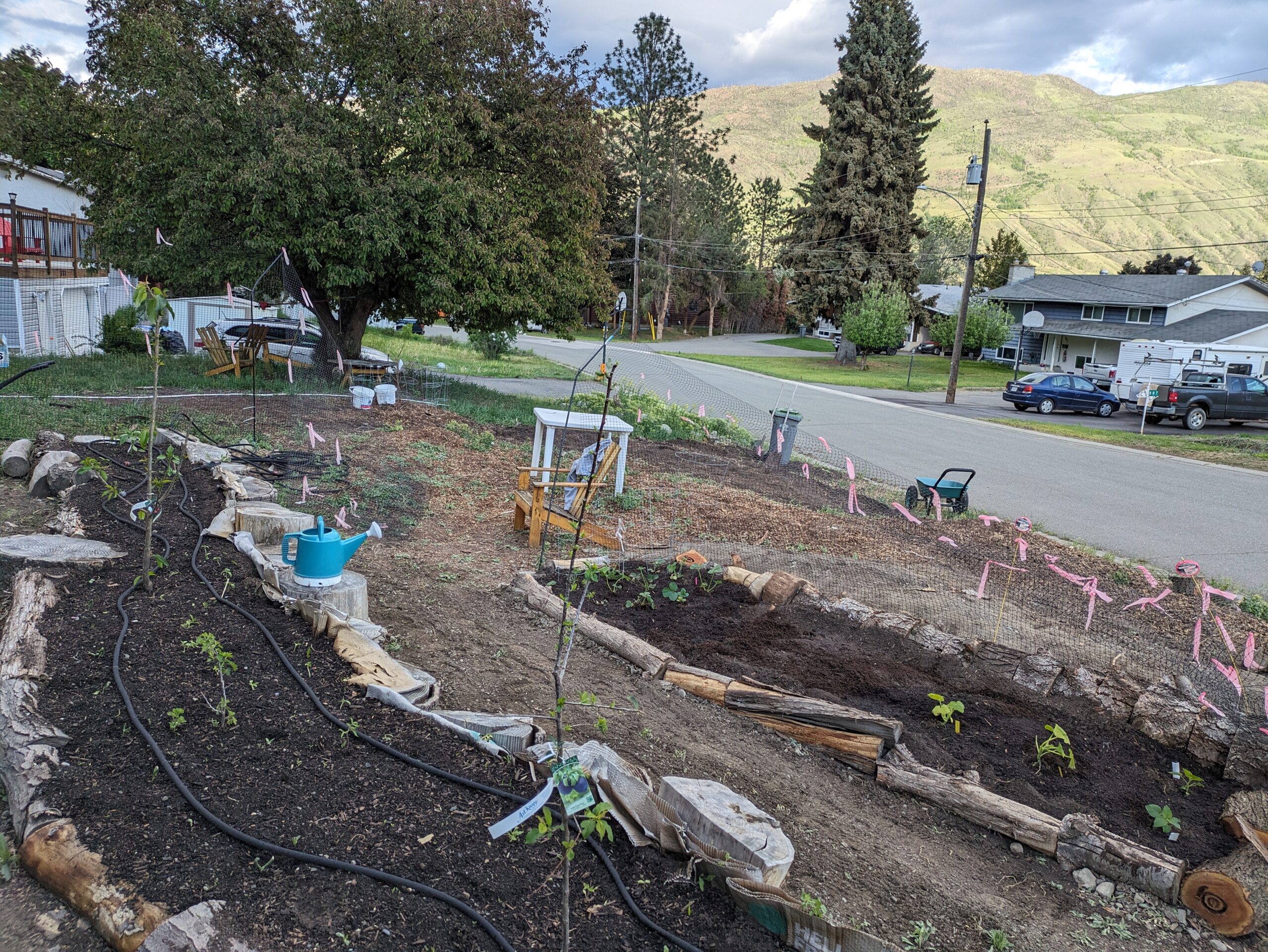
To begin my site assessment, Shelaigh asked me a simple question: How do you and your family use the space? As we talked it became clear that the front yard serves many purposes beyond landscaping. One of the first things we discussed was how important the front yard is as a community-building space. Our backyard is where we host meals and longer visits with family and friends, but the front yard serves a different purpose. It is where neighbours stop by while walking the dog, working in their gardens, or heading somewhere else. These interactions are often brief and informal. Sometimes we stand and chat for a few minutes; other times we sit down under the large shade tree for a visit before returning to our chores and commitments.
The Tree
The tree itself plays an important role in how our family uses the space. It provides shade on hot summer days and has become a natural gathering place. My youngest enjoys setting up his small tent beneath it, while my mom often takes a break there when working in the garden. I frequently find myself sitting under the tree to read, take a break from yard work, or finish a phone call. These everyday uses highlight that the tree is not only an ecological asset but also an important part of the social life of the yard.
As we discussed future possibilities for the yard, preserving this welcoming and accessible gathering area emerged as an important priority.
Pathways
The pathways through the yard were another important consideration. The route used by our mail carrier and the direct paths between our yard and the homes across the cul-de-sac reflect how we naturally access one another’s spaces and stay connected as neighbours.
One pathway in particular became a focus of our discussion because it is the only route that allows someone using a mobility device to access the backyard without encountering any stairs. Other routes – from the driveway, front entrance, or through the house – all involve stairs. As participants explored possibilities for the site, one person with experience in construction and aging-in-place considerations emphasized the importance of maintaining a direct and practical route. Another person suggested a gently curving pathway that could help reduce the slope and create a more gradual approach. The conversation highlighted the different ways accessibility, convenience, and comfort can be considered when designing outdoor spaces.
Frontage
The frontage area closest to the road also generated discussion. Although it appears to be part of the front yard, it is actually City-owned land and a previous conversation with a City GIS technician reminded us that municipal access needs should be considered when planning changes in this area. I shared with Shelaigh that one of my goals is to keep cars off the street whenever possible. On our cul-de-sac children still play and neighbours gather, and I would like to help create an environment that feels welcoming and leaves more room for people. Several participants suggested using pea gravel in this area to accommodate occasional visitor parking while still respecting the City’s needs, including that snow is regularly pushed onto it in the winter.
Deer
We also discussed the role deer play in shaping what might be possible in the front yard. When we moved to Kamloops five years ago, one of the things we were looking for was a place that could accommodate both a large family and an edible landscape. For years, we imagined transforming the front lawn into a food forest filled with fruits, herbs, and other edible plants. Over time, however, that vision began to change. Frequent visits from deer made us less enthusiastic about investing heavily in food production in the front yard. More recently, with my return to work and the realities of a busy household, we came to appreciate that the garden beds we already have in the backyard provide plenty of food-growing space for our needs. Shelaigh then noted that food forests and edible landscapes can still be successful in areas frequented by deer through thoughtful plant selection and design. She shared ideas for working with deer rather than against them, including the use of deer-resistant plants and strategic planting layouts.
Our youngest participant, listening carefully, proposed surrounding the property with what he called “pokey plants” to create a protective fortress against deer. (The idea was such a hit that Shelaigh joked she may have to borrow the phrase in her future work.) His design also included places to run, play, and explore. What I appreciated most was how naturally he incorporated both people and nature into his vision for the yard. Other adults brought ideas about accessibility, water management, planting plans, and long-term maintenance, but he reminded us that nature-friendly spaces should also be places where children can feel welcome, curious, and connected to the outdoors. It was a good reminder that successful landscapes need to work for people of all ages, abilities, and interests.
While those options remain available, I found myself increasingly interested in exploring how the front yard can become a pollinator-friendly space that contributes to biodiversity and still be accessible, welcoming, and community-oriented. The lawn currently provides very little habitat for pollinators and other beneficial insects, making it an ideal place to consider for creating habitat and strengthening ecological connection with the neighbourhood. Although I fully intend to incorporate pokey plants into the final design to redirect deer!
Maps
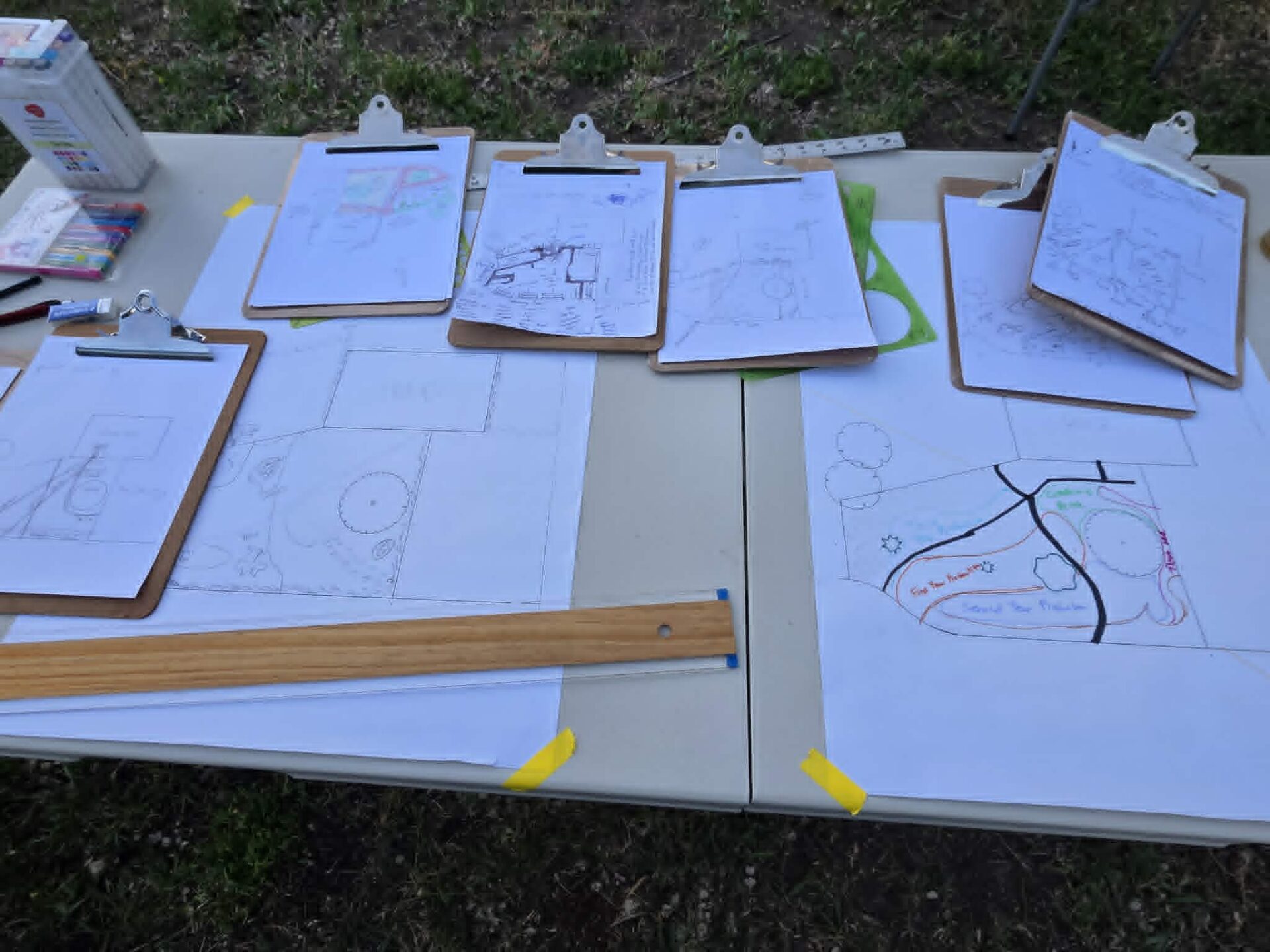
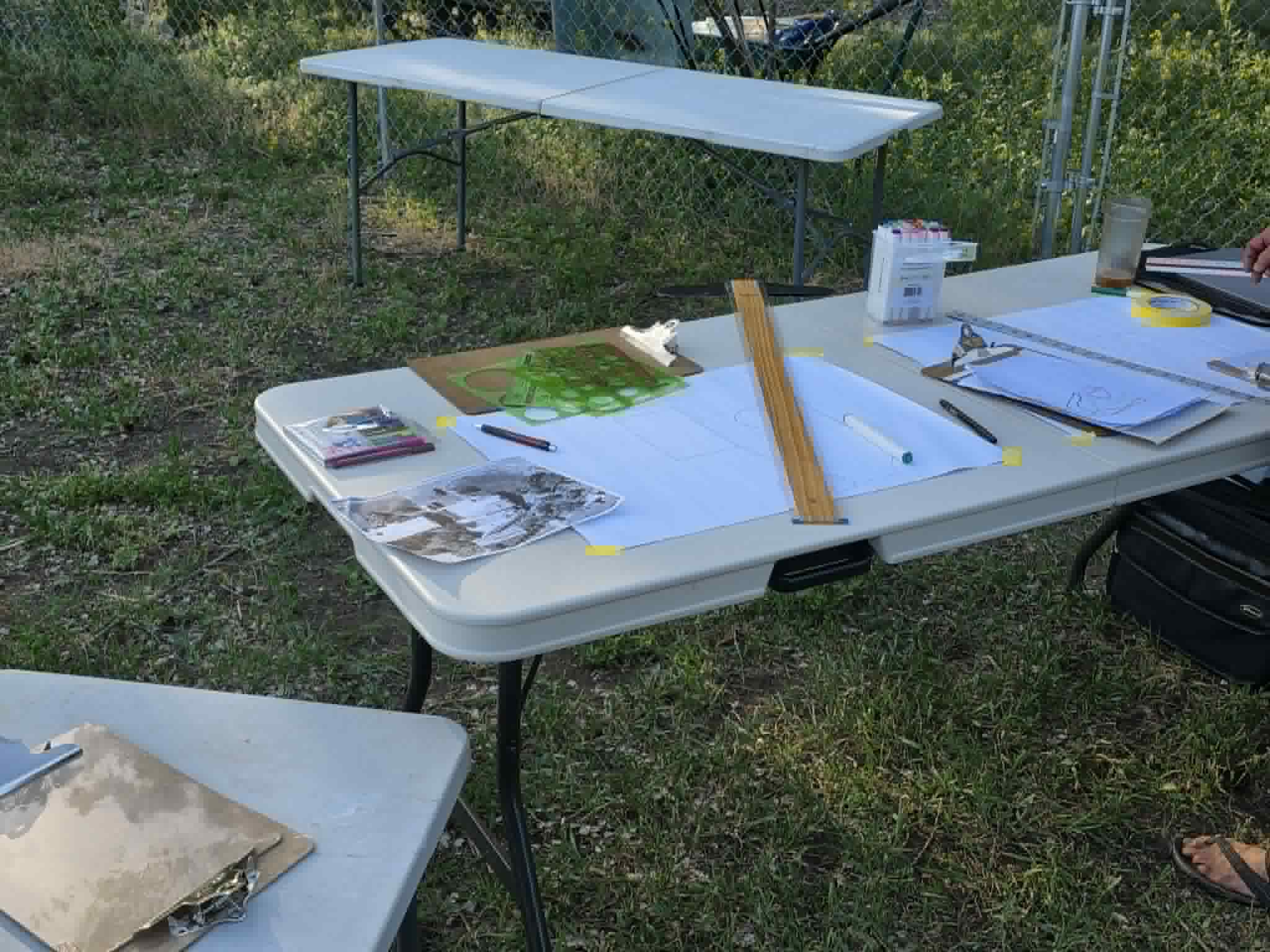
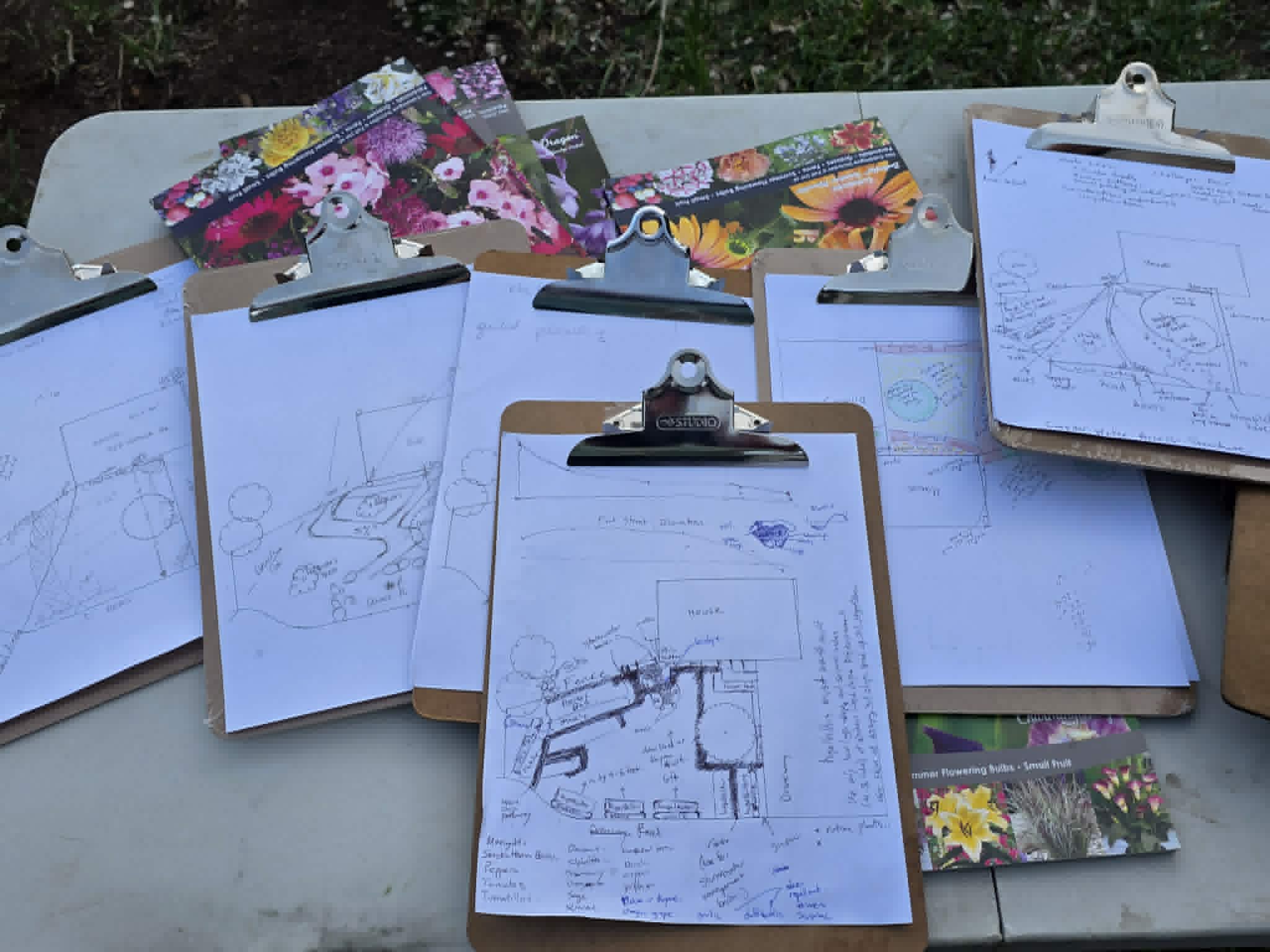
Once we had discussed how the space is used and identified key opportunities and constraints, Shelaigh provided the participants with scaled maps of the front yard showing the property lines, house footprint, and existing trees. Participants were then invited to develop their own design concepts. What emerged was a collection of thoughtful and highly personalized designs. While each participant approached the space differently, all began by preserving the features and functions that had been identified as important during the site assessment: the pathways, the mature tree serving as the focal point, accessibility, neighbour connections, and gathering spaces.
From there, however, participants built on those foundations in different ways. Some focused on water management – incorporating rain barrels, swales, rain gardens, and other features designed to slow, capture, and retain water on the site. Others emphasized pollinator habitat, proposing flowering plants, shrubs, trees, and layered vegetation to provide food and shelter for pollinators and other beneficial insects. Several designs included edible plants, while others explored sensory gardens, children’s play features, additional shade trees, stepping stones, seating areas, and natural gathering spaces. Through this process, I began to see the yard not as a single space, but as a collection of functional areas that could support different activities and goals.
The End of the Beginning
The evening brought together people from across Kamloops who each contributed their own ideas, experiences, and perspectives. I was particularly pleased that three neighbours joined us after my youngest helped distribute flyers around the neighbourhood. Building green corridors will require connection and collaboration between our households, so it was exciting to begin those conversations while learning alongside others who share an interest in creating more nature-friendly communities. By the end of the evening, I was left with a collection of beautiful designs, thoughtful advice, and new ways of thinking about the possibilities for the space.
Postscript: To join this project please register here.
A special thank you to Red Tomato Pies for helping make our vegetarian pizza dinner more affordable. Sharing food together helped create a welcoming atmosphere and gave participants an opportunity to connect, exchange ideas, and build community before we began the design work.
Transition Kamloops

Transition Kamloops is a volunteer-driven, registered not-for-profit society focused on increasing local resilience and self-sufficiency in food, water, energy, culture and wellness. We emphasize a local economy, healthy ecosystems, and grassroots community building, while reducing our dependence on fossil fuels. We believe in a better way: a community that sustains life in all its diversity, strives for equality and justice and invests in the future.
Transition Kamloops recognizes that we are living on Secwépemcul’ecw—land that was never ceded to settlers, and continues to be home to vibrant Indigenous cultures, languages, and traditions. We acknowledge the impact of colonization, forced displacement, and ongoing struggles faced by Indigenous peoples. We commit to listening, learning, and building positive relationships with Indigenous communities as we work towards reconciliation.
My Blog Posts