
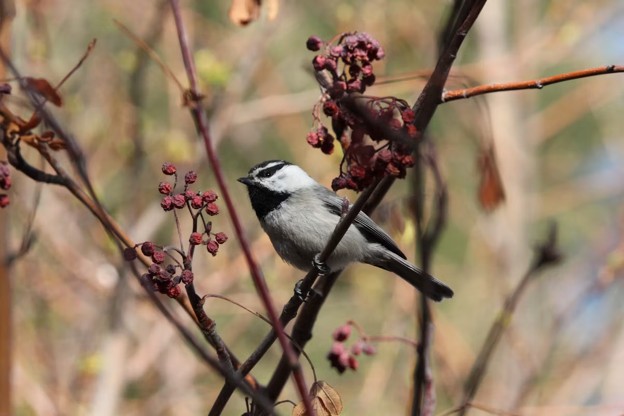
Urban heat islands affect birds too!
Photo by anish lakkapragada on Unsplash
Mountain Chickadees, like other songbirds, feed their nestlings mainly on insects: caterpillars are a favourite choice. Insects are high in protein, a lot of which is needed by growing babies.
Many studies, of lots of species, over a long period of time, have shown that birds time their reproduction to coincide with peak abundance of caterpillars. This ensures that high-quality food is available and plentiful when growing nestlings need it the most. But various things including climate change and urban heat islands can change the timing of insect development.
In 2019 a study conducted at TRU looked at the change in caterpillar abundance over the nesting season of mountain chickadees in and around Kamloops. (Fun fact: they used special devices to collect caterpillar poop near the birds’ nests; the more caterpillars, the more poop!)
They found:
- In both urban and rural habitats (chickadees nest in both) the abundance of caterpillars changed over the season and was highest when nestlings were about 11 days old (when they would be big and hungry)
- Both the 11-day point and caterpillar abundance occurred about a week earlier in nests in the city than in those outside it.
They concluded that insect development occurred earlier in urban environments—probably due to warmer temperatures in the city—and that urban birds were adjusting to it.
Can all species do this? Can they continue to do it as climate change makes temperatures warmer, especially in urban heat islands, and less predictable? Who knows!
What we do know is that bird populations are on the decline in Canada.
Transition Kamloops

Transition Kamloops is a volunteer-driven, registered not-for-profit society focused on increasing local resilience and self-sufficiency in food, water, energy, culture and wellness. We emphasize a local economy, healthy ecosystems, and grassroots community building, while reducing our dependence on fossil fuels. We believe in a better way: a community that sustains life in all its diversity, strives for equality and justice and invests in the future.
Transition Kamloops recognizes that we are living on Secwépemcul’ecw—land that was never ceded to settlers, and continues to be home to vibrant Indigenous cultures, languages, and traditions. We acknowledge the impact of colonization, forced displacement, and ongoing struggles faced by Indigenous peoples. We commit to listening, learning, and building positive relationships with Indigenous communities as we work towards reconciliation.
My Blog Posts