
Data Centres: What do we really know? What do we need to know?
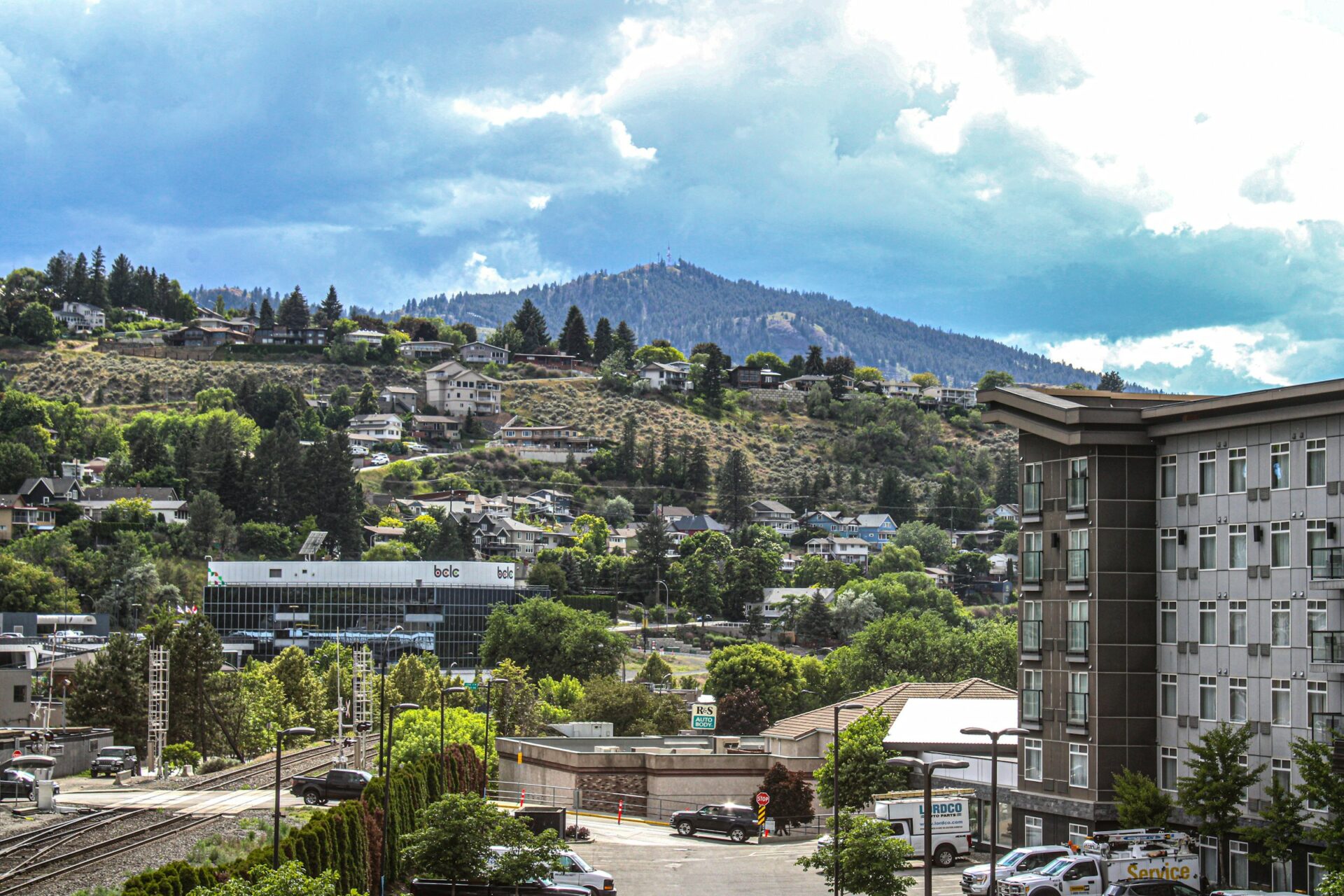
Kamloops is being sought out as a data centre hub for a variety of reasons. Easy access to land, prime environmental conditions (drier, cooler air), easy approval processes, and reasonable tax rates that will ensure profit for companies seeking to build. There are few regulatory implications and little pushback from City officials at this time. There are data centres already here that have successfully operated for years. So, what has increased the urgency and number of requests?
The tech giants of the United States and the many smaller organizations that believe that Artificial Intelligence will be a huge profit-maker and essential for corporate survival are driving these requests. While the data centres being proposed for Kamloops are not superhubs, and they are not gas-powered (like some being built elsewhere), there are significant issues that have not been addressed by the City with in regard to the impact, both short and long-term for our community; AI data centres are not mentioned in Kamloops’ official community plan (OCP).
Who is responsible? What are the benefits? What are the costs?
Like many businesses, the tech industry wants to create a sense of urgency to ensure maximum benefit and profit for owners and shareholders even before citizens have had a chance to consider whether the business is an appropriate fit for their community. Data centres are not currently classified in a way that fits neatly into land use planning and development guidelines. This is important, especially when considering where data centres will be built.
We propose that the City of Kamloops impose a moratorium before continuing with the additional proposed data centres. The City needs to consider whether data centres fit in the industrial or light industrial categories or whether an entirely new category should be created for them based on a variety of factors that are unique to data centres. How energy and water is used, how heating and cooling will impact the community at large, how waste chemicals, equipment, and building materials will be disposed of, what the noise considerations are, and the implications of a possible financial downturn of the AI industry—all these factors need to be investigated. More legislative considerations are listed at the end of this document.
Questions and current data
- Who will pay for the increased hydroelectricity usage or costs of infrastructure upgrades? What are the cost implications for increased energy use for both the City of Kamloops and individual taxpayers in Kamloops? While the data centres being proposed are smaller in size than hyperscale facilities, the number of centres being proposed and the increased size of the Telus facility should raise questions for cost-conscious citizens, as together, the increasing, cumulative effect will be equivalent to the large centres being proposed for Alberta and other locations. The proposed use for some of these centres (i.e., those to be run by Bell) is for AI training, which is especially energy intensive. A closed-loop system for cooling is being proposed, and while that may decrease the freshwater draw of the data centre, it increases the energy usage for cooling the racks and dispersing the increased heat. Excess heat may be used to heat buildings as is proposed at TRU, but what will be done with excess heat in our extremely hot summers, or during a heat dome? All of this points to significantly increased electricity bills for British Columbians. It also hints at possible necessary construction of improved infrastructure to bear the increased power draws of up to 120 megawatts (MW) (the equivalent of powering up to 120,000 homes). In the US, some states are now requiring companies to pay the majority of costs for infrastructure upgrades and increased use, rather than charging individual ratepayers.
- What about water? Data centres draw significant amounts of water. A medium sized data centre can use up to 1.1 million litres of water per day or as much as a 1000 households. Given that Kamloops is not as cold as it used to be and because of our arid conditions, the impact of multiple, large data centres on water is unknown. Will data centres be required to publicly share how much water they are consuming? We have heard from CFJC -TV’s reporting that there are water use covenants in place. How can citizens track water use by various users? Will the City have to decide which water users take priority during drought conditions? Can our rivers sustain these kinds of water draws? Ultimately, could corporate water use be given priority over water use for households?
- What will the impact of the continuous noise be? In a mixed-use neighbourhood, with a data centre (like the proposal for Kenna Village), the constant hum of fans and cooling systems, which tend to produce low-level, constant noise will impact residents, potentially raising anxiety levels and reducing quality of sleep which, in turn, impacts work and learning productivity. Should diesel generators be used as back up for power, that noise would be additional to the constant noise that is produced. Should data centres be built away from residential areas with noise mitigation should be built in through baffles and external noise barriers and paid for by the developer and the corporation owning the data centre?
- Where will the toxic electronic waste materials be disposed of and who is responsible for the cost of clean-up and containment in the event of failure? Batteries, refrigerant chemicals, and chemicals that can leach from servers when they are disposed of due to heat damage are all part of considerations related to running data centres. How and where will these materials be disposed of so that they cannot leach into our groundwater or drinking water sources? Who will bear the costs of clean-up and containment should artificial intelligence prove to be a short-lived, speculatively-financed bubble, leaving us with large warehouses filled with servers?
- Tax Revenues: Has the City offered Telus and Bell any incentives (e.g. tax breaks, land cost, power subsidies, regulatory relief)? Will any incentives offered balance the possible long term costs to the City? What will the impact be on cost of living for Kamloopsians, given that construction jobs for building data centres will be limited to a two year period; afterwards, these facilities offer little in the way of jobs, and possibly significant costs in electricity, water, noise and pollution for the City and its residents. If the only revenue for the city after data centre construction is property taxes, are these taxes sufficient to offset the costs for infrastructure upgrades, water and energy use impact, noise mitigation and waste disposal/mitigation?
- Can the City work with BC Hydro to discuss impacts of costs of data centres on communities to ensure that hydroelectricity rate increases and supply issues are proportionally carried and mitigated by data centres. Will data centres pay a portion of the costs for grid upgrades or new generation capacity?
- A Mandatory Community Benefit Agreement before permits are issued would allow direct, meaningful representation from affected communities. Agreements should secure concrete local benefits, not just consultation (e.g., job guarantees, skills training, use of local suppliers).
- Update noise by-laws to address the unique noise pollution produced by
- data centres. Require data centres to use sound baffling or other noise suppressants on equipment. Distance requirements from homes, schools, long-term care facilities and hospitals should be considered.
- Prohibit tax breaks, subsidies, or other public incentives for data centres. Public funds should not support increased pollution and should address use of diesel generators should electrical supplies fail.
- Require public reporting of energy use, water consumption, and emissions to ensure accountability and allow assessment of cumulative impacts.
- Require binding offset plans addressing land use, water stress, and emissions (could look like green infrastructure, reforestation, water conservation, and a ‘hierarchy of use’ plan). Offsets must be local, verifiable, and tied to an ongoing monitoring framework.
- Place a limit on the total number of centres in the municipality to avoid the creation of the equivalent of one or more hyperscale centres.
Supporting Documents
City of Chestermere. (n.d.). Official Website. City of Chestermere. https://thecityofchestermere.ca/cityhall/wp-content/uploads/sites/10/2025/03/Bylaw-014-25-LUB-Amendments-for-Data-Center.pdf
Enoch, S., & Pettigrew, R. (2026, February 10). News and commentary. Canadian Centre for Policy Alternatives. Retrieved May 26, 2026, from https://www.policyalternatives.ca/news-research/so-youre-getting-a-data-centre-heres-what-to-know .
Gonzalez, X. (2026, May 19). When the biggest ai data centre comes to your town. The Tyee. Retrieved May 26, 2026, from https://thetyee.ca/News/2026/05/19/When-AI-Data-Centre-Comes-Town/?utm_source=daily&utm_medium=email
Mantilla, M. (2025, December 4). Will kamloops be an AI hub? The Wren. Retrieved May 26, 2026, from https://thewrennews.ca/will-kamloops-be-an-ai-hub/
Olds Transparency Project. (n.d.). Health Facts About Data Centres. Olds Transparency Project. Retrieved May 26, 2026, from https://oldstransparencyproject.ca/data/CAPE-%20Data%20Centres%20&%20Health%20-%20Fact%20sheet.pdf
Paddison, L. (2026, March 30). Scientists have found an alarming environmental impact of vast data centers. CNN. Retrieved May 29, 2026, from https://www.cnn.com/2026/03/30/climate/data-centers-are-having-an-underrported.
Peters, J. (2026, May 28). City of Kamloops to form draft legislation meant to regulate data centres. CFJC Today. Retrieved May 29, 2026, from https://cfjctoday.com/2026/05/27/city-of-kamloops-to-form-draft-legislation-meant-to-regulate-data-centres/.
Yañez-Barneulo, M. (2026, March 23). Communities Are Raising Noise Pollution Concerns About Data Centers. Environmental and Energy Study Institute. Retrieved May 28, 2026, from https://www.eesi.org/articles/view/communities-are-raising-noise-pollution-concernsabout-data-center
Photo by Peter Robbins on Unsplash
Transition Kamloops

Transition Kamloops is a volunteer-driven, registered not-for-profit society focused on increasing local resilience and self-sufficiency in food, water, energy, culture and wellness. We emphasize a local economy, healthy ecosystems, and grassroots community building, while reducing our dependence on fossil fuels. We believe in a better way: a community that sustains life in all its diversity, strives for equality and justice and invests in the future.
Transition Kamloops recognizes that we are living on Secwépemcul’ecw—land that was never ceded to settlers, and continues to be home to vibrant Indigenous cultures, languages, and traditions. We acknowledge the impact of colonization, forced displacement, and ongoing struggles faced by Indigenous peoples. We commit to listening, learning, and building positive relationships with Indigenous communities as we work towards reconciliation.
My Blog Posts