
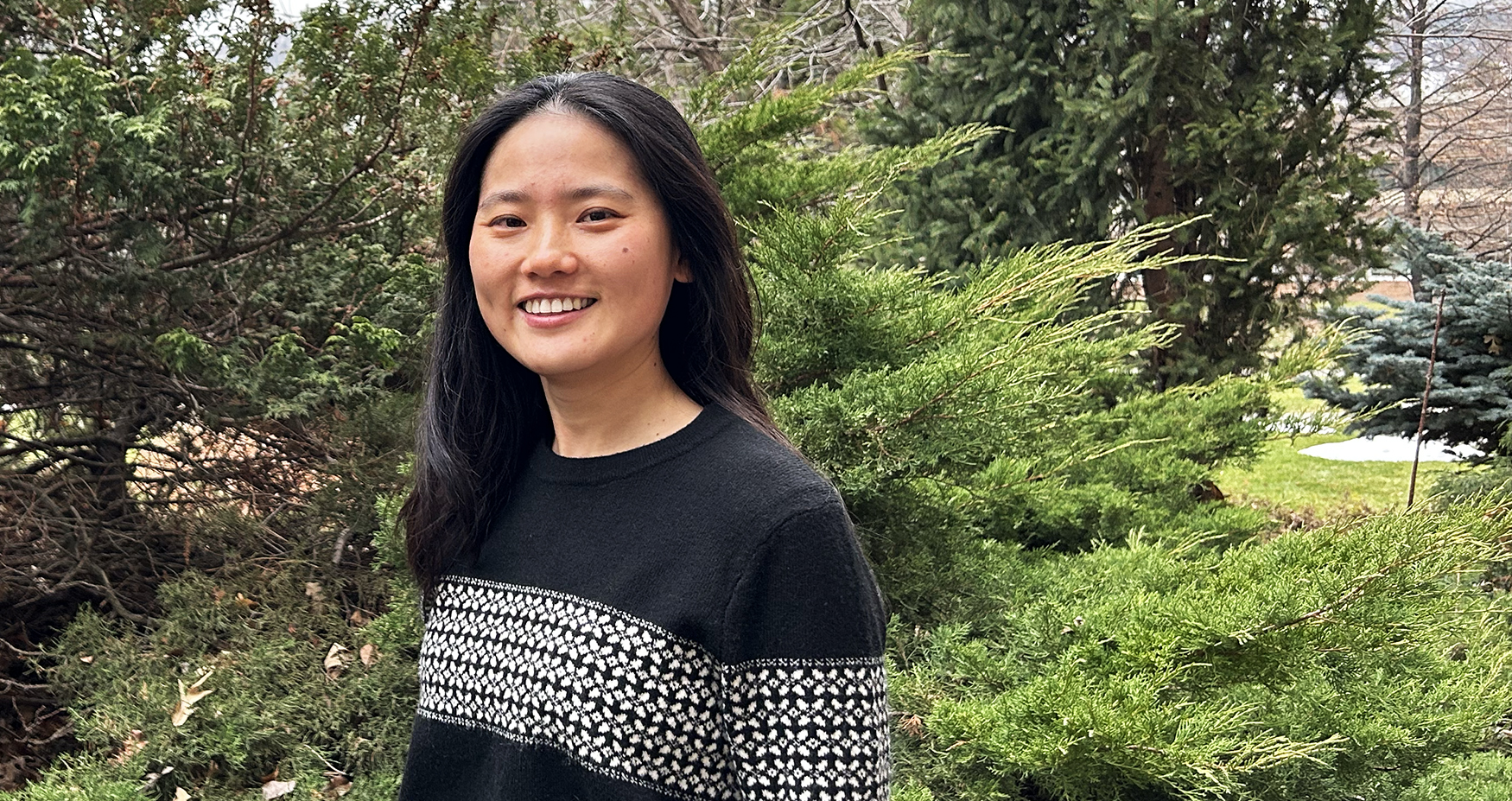
Wildfire researcher maps a safer future for communities
As wildfire seasons in Canada become increasingly severe, communities across the country are looking to the latest wildfire science to help manage risk and strengthen resilience. By studying the full range of factors that shape wildland fires — from fire activity to burn severity to community-level risk — researcher Dr. Weiwei Wang is developing new models and tools that can help Canadians prepare for a future of escalating wildfire activity.
“My research models wildfire activity and its effects across different timescales and regions, helping identify where and how fire activity is changing and what is driving those changes,” says Wang, an assistant professor in the Department of Natural Resource Science at Thompson Rivers University (TRU).
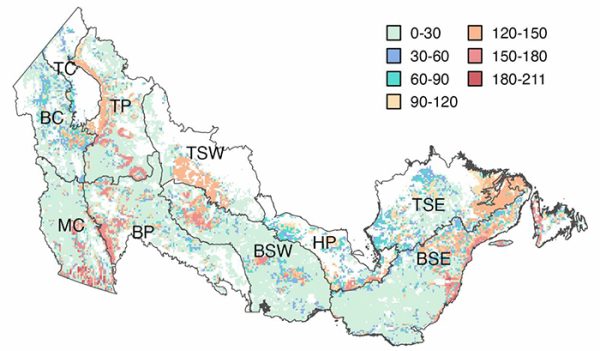
Mean annual number of days conducive to high-severity burning across Canada, 1981-2020.
Her work examines the mix of forces contributing to longer fire seasons and more intense wildfires, including more frequent extreme fire-weather days, heavier fuel loads and more widespread drought under a warming climate. She develops prediction models to estimate the area that could burn and how severe those burns might be each day across Canada. These short-term forecasts can help anticipate fire spread and potential impacts.
“This information supports decisions about where to send resources, how to plan prescribed fires and how to prepare for emergencies before fires occur,” Wang says. “I also model fire behaviour under specific environmental conditions for community-level fire risk assessment and reduction planning.”
How to live safely with fire
Wang’s interest in wildfire science began in 2019 as she was considering doctoral studies. That year, she watched a catastrophic wildfire season unfold in Australia, and in southwestern China many firefighters lost their lives in one particularly destructive fire.
“Those heartbreaking images were shocking,” says Wang. “I kept asking myself what I could do to help prevent tragedies like these. That’s when I committed my PhD and my research career to fire science and community resilience.”
She earned a PhD in forest fire science from the University of British Columbia and worked as a postdoctoral research fellow with the Canadian Forest Service in Edmonton before joining TRU in 2025. Her work aligns with the university’s growing focus on use-informed research and community resilience.
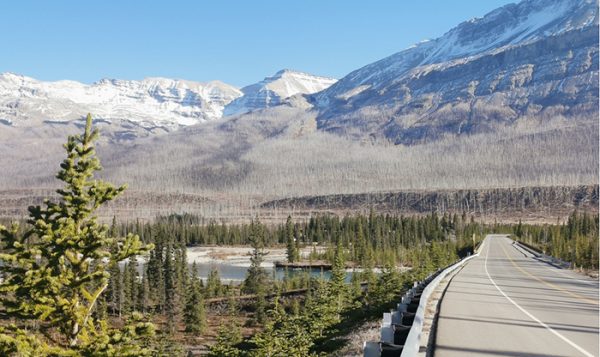 One aspect of wildfire behaviour that interests Wang is how past fires affect the risk of future ones — a process known as “fire-fuel feedback.”
“Fire-fuel feedback describes how past fires influence future fire activity,” she says. “When an area burns, much of its burnable fuel is consumed or altered, which can temporarily reduce the likelihood or size of subsequent fires.”
By studying this feedback effect across Canada, Wang is improving projections of future fire activity under a changing climate and informing long-term vegetation management in diverse ecosystems.
Hope for a resilient future
Wang says building a bridge between wildfire science and wildfire management is the most meaningful part of her work. Her goal is to support more effective fire management and help people learn to live safely with fire.
“I collaborate with researchers, practitioners and communities to make sure the results translate directly into practice,” she says.
“I am hopeful because capacity is rising on all fronts: richer datasets, more advanced models, multidisciplinary approaches and stronger partnerships between science and management. With these pieces aligning, communities can become measurably more resilient to fire.”
By helping identify where and when fires are most likely to occur and where fire impacts could be significant, Wang’s research offers practical tools for reducing risk, improving preparedness planning and managing vegetation long-term. Her work reflects TRU’s commitment to applying academic expertise to real-world challenges and delivering solutions that strengthen communities.
“Seeing my research help advance fire science, inform fire practice and strengthen community resilience is incredibly rewarding, especially as Canada faces more challenging fire seasons.”
Wang’s research connects to TRU Wildfire, a university-wide initiative advancing research, education, training and innovation to address current and future wildfire challenges. Learn more.
Thompson Rivers University is leading in sustainability. Learn more about TRU’s contributions to the UN Sustainable Development Goals.