
Repair Café: where the magic happens
For info on upcoming Repair Cafés, click here
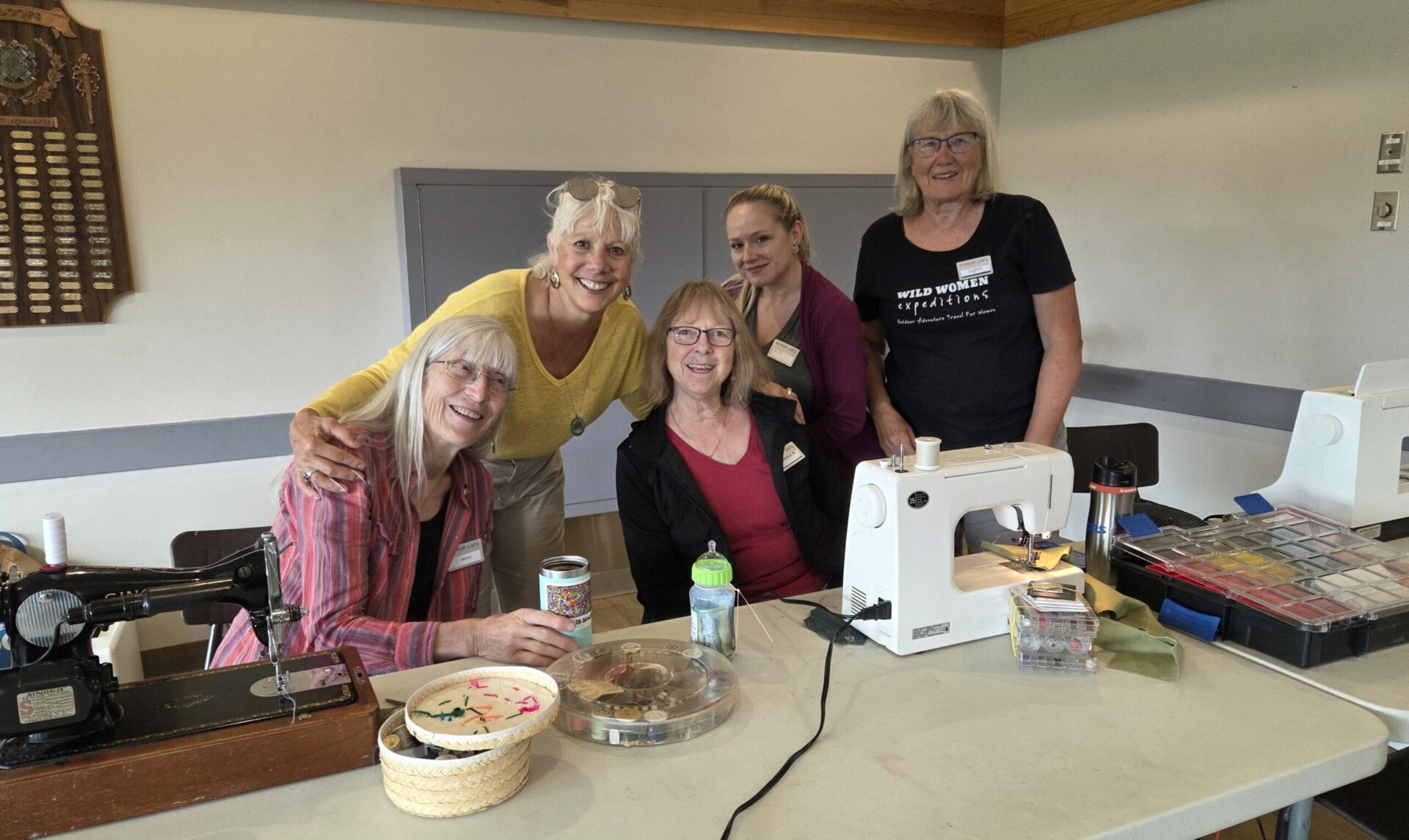
The Hal Rogers Centre was filled with the sounds of the Repair Café last Saturday, May 31—drills whirred, soldering irons heated up, hammers pounded and bike wheels turned amid the hum of questions, answers, discussion and the ringing of the bell when a successful repair was made. It was a hopping place! A cluster of sewing folk and their machines lined one wall, leaving room for a bike repair station in the corner. On the opposite wall, a woodworking table was set up to deal with wobbly chair legs and other furniture issues. Stations for “electrical and mechanical” repairs filled the long wall of windows and the middle of the room; at these, a small army of fixers dealt with a variety of lamps, fans, weed whackers, clocks and other assorted problem-plagued possessions. And of course, the registration and triage tables near the entrance provided a starting point for the line up of folks seeking help.
I was early, bearing the Transition Kamloops banner and the tape to put it up—and I was thus allowed to sign up a few minutes before the official 10:00 am start time. As well as the banner I brought an elderly briefcase with a detached clasp; since I had been lucky enough to catch it when it broke off, all it needed was re-attaching. Easier said than done. My problem was designated “mechanical” and I spent close to an hour (9:54-10:53 according to my registration form) in the delightful company of Graham (aka the Bearded Plumber), who thought about it, worked at it, and eventually solved the problem! Part of the goal of attending a Repair Café is to learn how to fix the problem if you encounter it again—that is, for the fixer to teach you how to fix it yourself. At a previous Repair Café, I did indeed come away not only with a now-functional lamp, but enough info to diagnose and probably fix a similar problem myself. I’m not sure I could do that in this case (no pun intended), since specialized tools were required, but I did learn a lot about determination and creativity: just because you don’t have exactly the part that is missing, doesn’t mean you can’t solve the problem! That is an equally important lesson, I think; feeling empowered is half the battle when faced with any kind of issue.
Travelling around the room, I enjoyed watching some of the other folks at work. Using a sewing machine that had belonged to her mother (my mother had one exactly like it!) with which she had created or repaired many an item—Anne was fixing a fabric briefcase. Bill was carefully fiddling with a stopped clock and he and his client were delighted when it finally started to work. Lamps and fans were present in the plural; they seem to break down often, Graham told me. A heating pad was receiving attention at one table and a vacuum cleaner at another. Although not everything that arrived was fixed, the “success” bell rang regularly—everyone seemed to enjoy the experience of at least trying to save something that might otherwise be thrown away.
And those are really the goals of the Repair Café, after all—trying to keep things out of the landfill. For the volunteer fixers it offers the satisfaction of using one’s skills—and for the “clients” the opportunity to watch the magic happen and learn a few DIY tricks. Repair Café now takes the summer off—stay tuned for the next event, coming this fall.
Transition Kamloops

Transition Kamloops is a volunteer-driven, registered not-for-profit society focused on increasing local resilience and self-sufficiency in food, water, energy, culture and wellness. We emphasize a local economy, healthy ecosystems, and grassroots community building, while reducing our dependence on fossil fuels. We believe in a better way: a community that sustains life in all its diversity, strives for equality and justice and invests in the future.
Transition Kamloops recognizes that we are living on Secwépemcul’ecw—land that was never ceded to settlers, and continues to be home to vibrant Indigenous cultures, languages, and traditions. We acknowledge the impact of colonization, forced displacement, and ongoing struggles faced by Indigenous peoples. We commit to listening, learning, and building positive relationships with Indigenous communities as we work towards reconciliation.
My Blog Posts