
New ceremonial mace debuts at Spring Convocation
By Marissa Dederer
Stories of Coyote have been shared for generations.
Soon, the trickster — an important figure in Secwépemc culture — takes a leading role in Thompson Rivers University (TRU) convocation ceremonies.
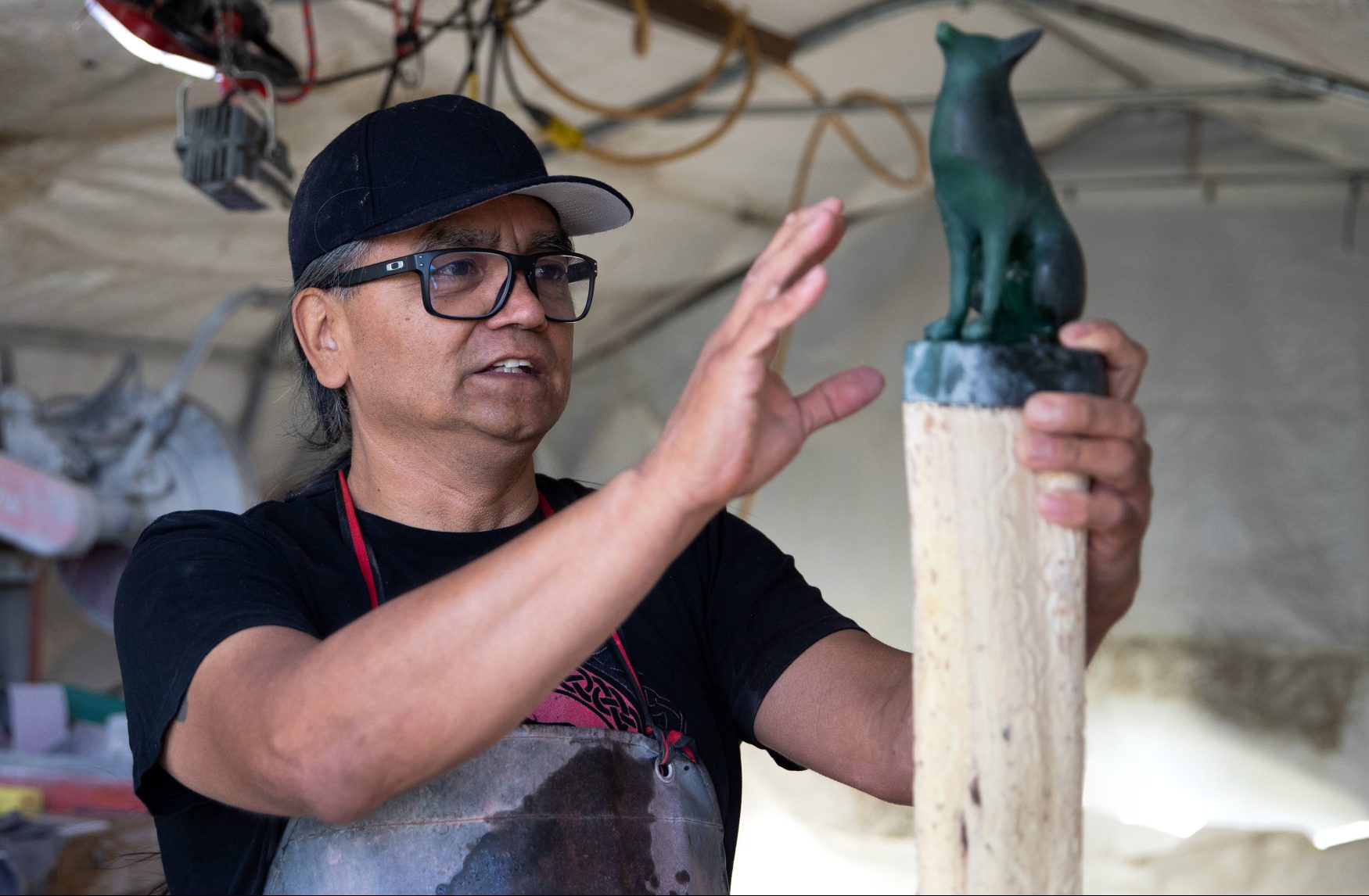
Tk’emlúps artist Ed Jensen designed and carved a new ceremonial mace for the university featuring Coyote and stories of the Secwépemc people. For Jensen, the inclusion of Coyote, known in Secwépemc culture as Sk’elep, was only natural for the piece.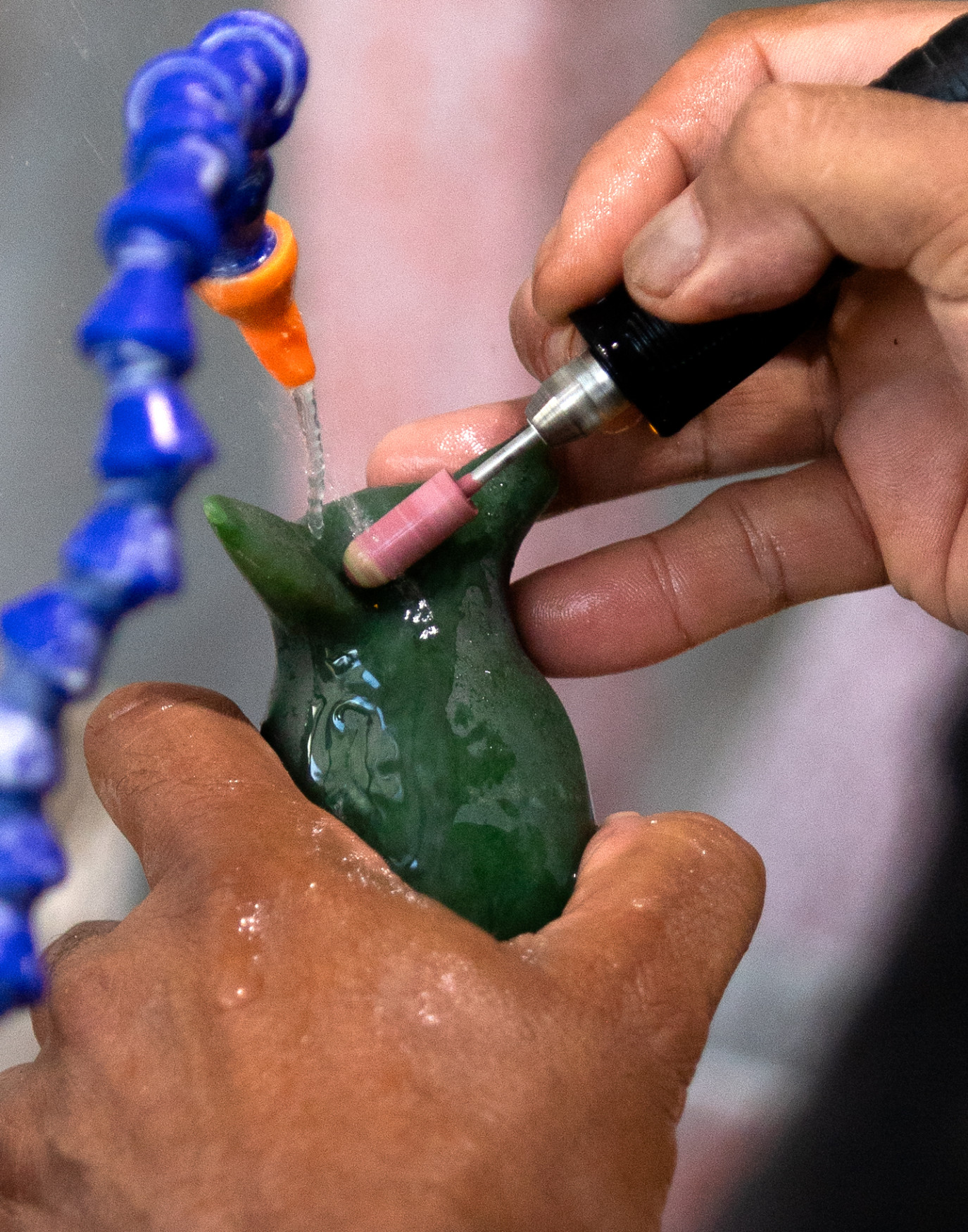
“Coyote is that character in Secwépemc culture that was there from the beginning of time, creating a space for humans to live and to learn and to survive,” Jensen said. “I thought a lot about what Coyote’s role is today and he’s done all the work. His sons came and carried on some more work. And now, when he left, he walked away to the east. It’s foretold that he’s going to come back someday, but in our beliefs, he’s over there overlooking Secwepemcúl’ecw.”
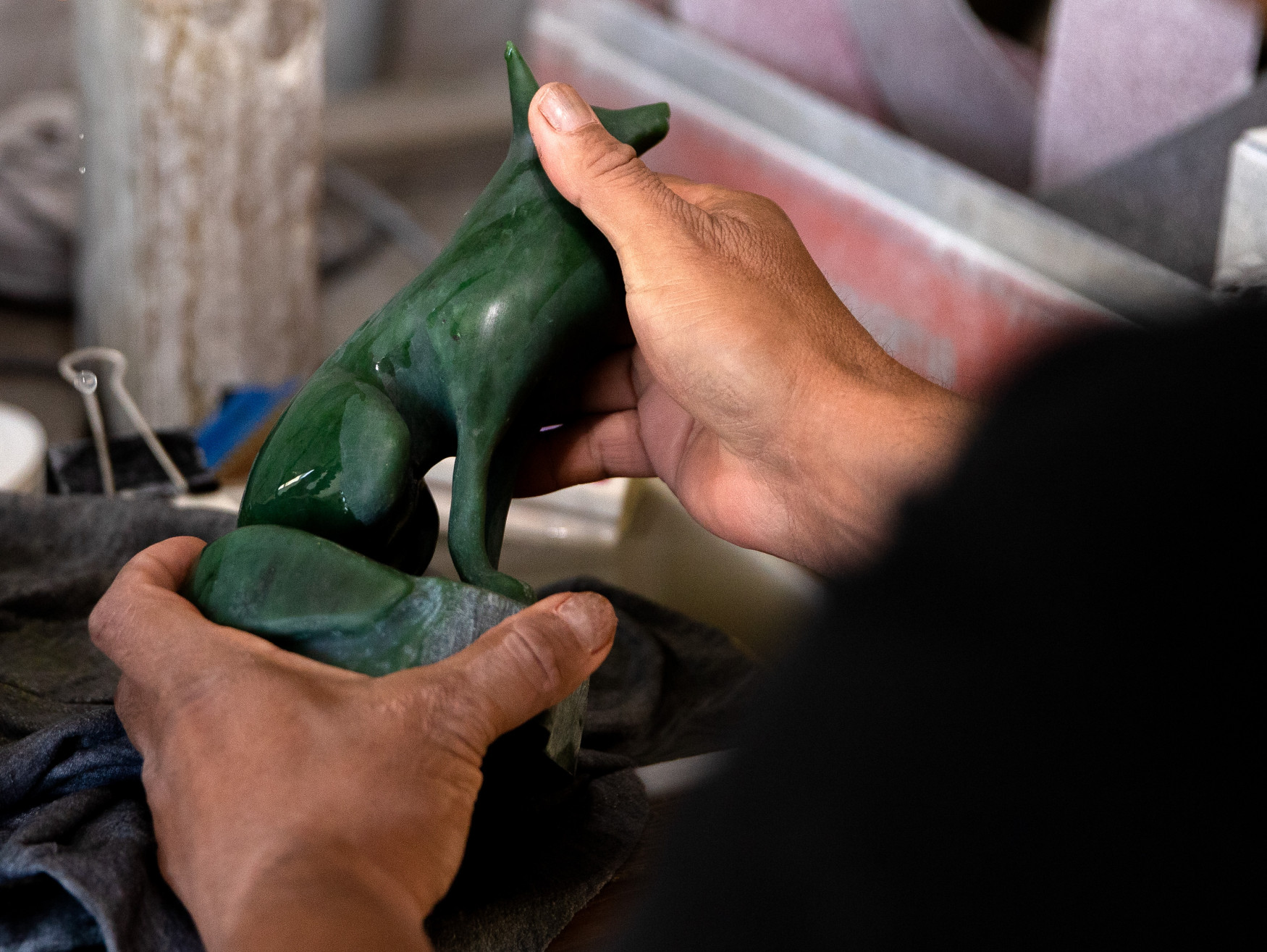
The new mace prominently features Coyote, carved from a formidable piece of jade that was polished until it glowed. He sits atop a juniper staff carved with pictographs that represent the stories of Secwépemc people as they live on the land.
“Coyote’s guarding those stories,” said Jensen.
He began with a sketch of Coyote from two angles: a front view and a side view. He then set out to source materials for the mace. The jade piece is from the Cassiar region in Northern B.C., known for its jade deposits. The juniper branch has been sitting in his shop for almost a decade, waiting for the right project. He collected it from nearby Strawberry Hill.
“Juniper is a very powerful medicine for Secwépemc people,” he said. “It’s a very prevalent wood on the landscape that Secwépemc people use to make tools with for eons.”
Making the first cut in the jade was a challenge. Jensen worked with a local water jet company which carved the initial shape of Coyote. This saved the artist many precious hours, so he could focus on fine-tuning the form and carving out details.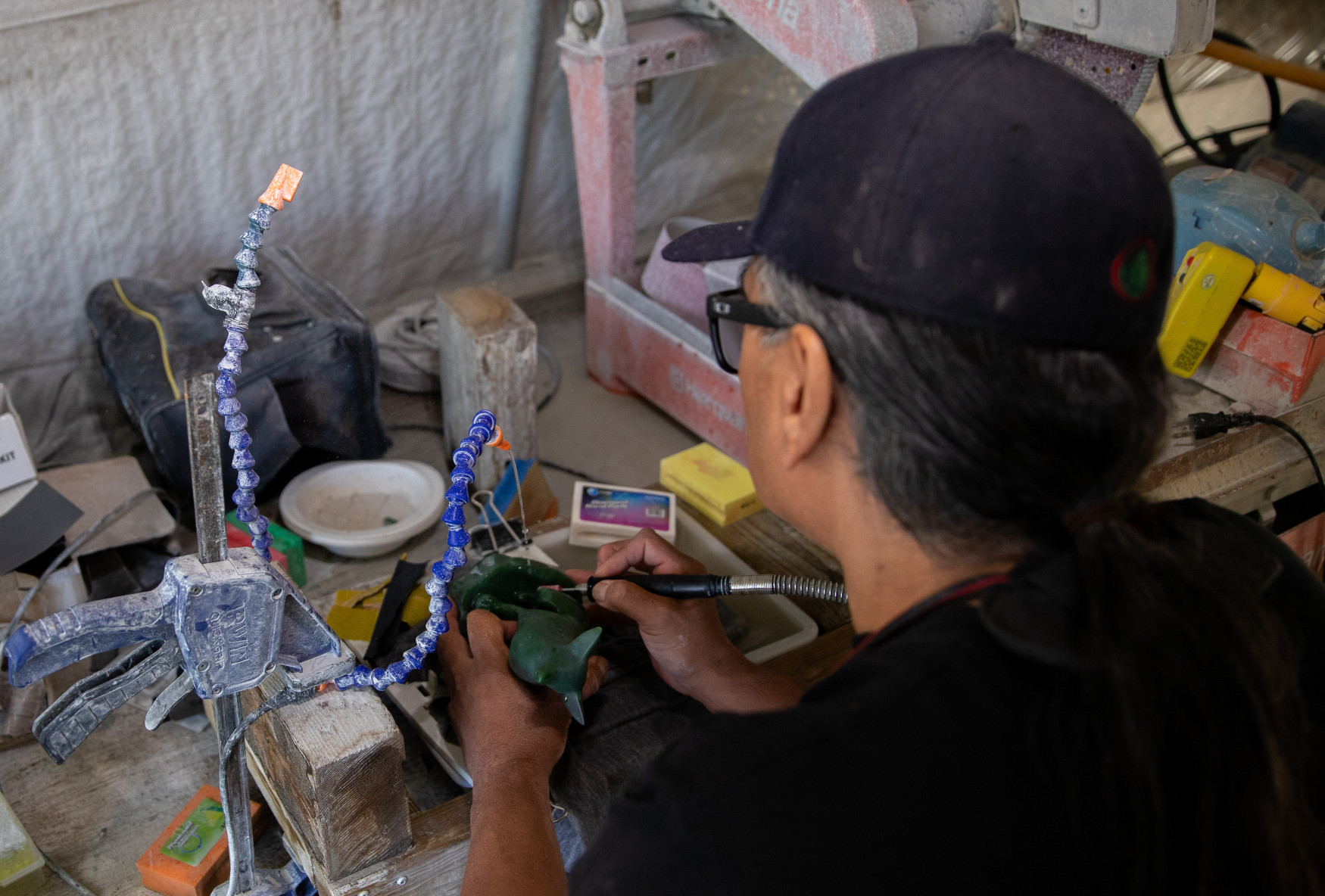
“I always have trouble with feet and faces,” said Jensen. “But I always manage to get to the place I want to be.”
Initially, he struggled with the cost of the material. Jade is expensive. And the Coyote is a big presence in the piece. He worked slowly, methodically.
“You can always take the material away, but you can’t put it back on,” he said. “That was the most challenging part for me, getting enough confidence to really start digging into the piece and making sure I didn’t ruin the piece.”
Once the carving was done and the jade glowed, Jensen mated it with the juniper staff.
The staff is carved with pictographs depicting stories of the Secwépemc people. To emphasize their importance, Jensen painted them with red ochre.
The artist, who is a respected hunter, hunting guide and knowledge keeper among Tk’emlúps te Secwépemc, is looking forward to seeing his art used in future convocation ceremonies.
“It’s a very big part of my career, knowing that his piece will be leading these convocations for years to come is just as big an honour as I can imagine,” he said.
“It’s also a legacy of Tkemlups traditions that long after I’m gone, people are going to be able to look at this piece and know that it was a homegrown, grassroots Secwépemc person that did this project, somebody who knew the stories, somebody that was aware of the culture.”
The ceremonial mace isn’t the first project Jensen has completed for the university. He created a pair of pétse, traditional digging sticks, for a ground-breaking ceremony last fall, marking the start of the new Indigenous Education Centre on campus. He is also working on a cedar wood relief panel for the Chappell Family Building for Nursing and Population Health.
This spring, Jensen takes part in an artist residency at the University of Canterbury in New Zealand. He is looking forward to bringing what he learns back to Tk’emlúps and continuing to mentor young Secwépemc artists.
Fast facts:
- The ceremonial mace took four months to complete
- Two materials were used: jade and juniper
- The materials were both sourced from B.C. The jade is from Cassiar and the juniper is from Tk’emlúps