
Global workshop strengthens sharing about Indigenous fire stewardship
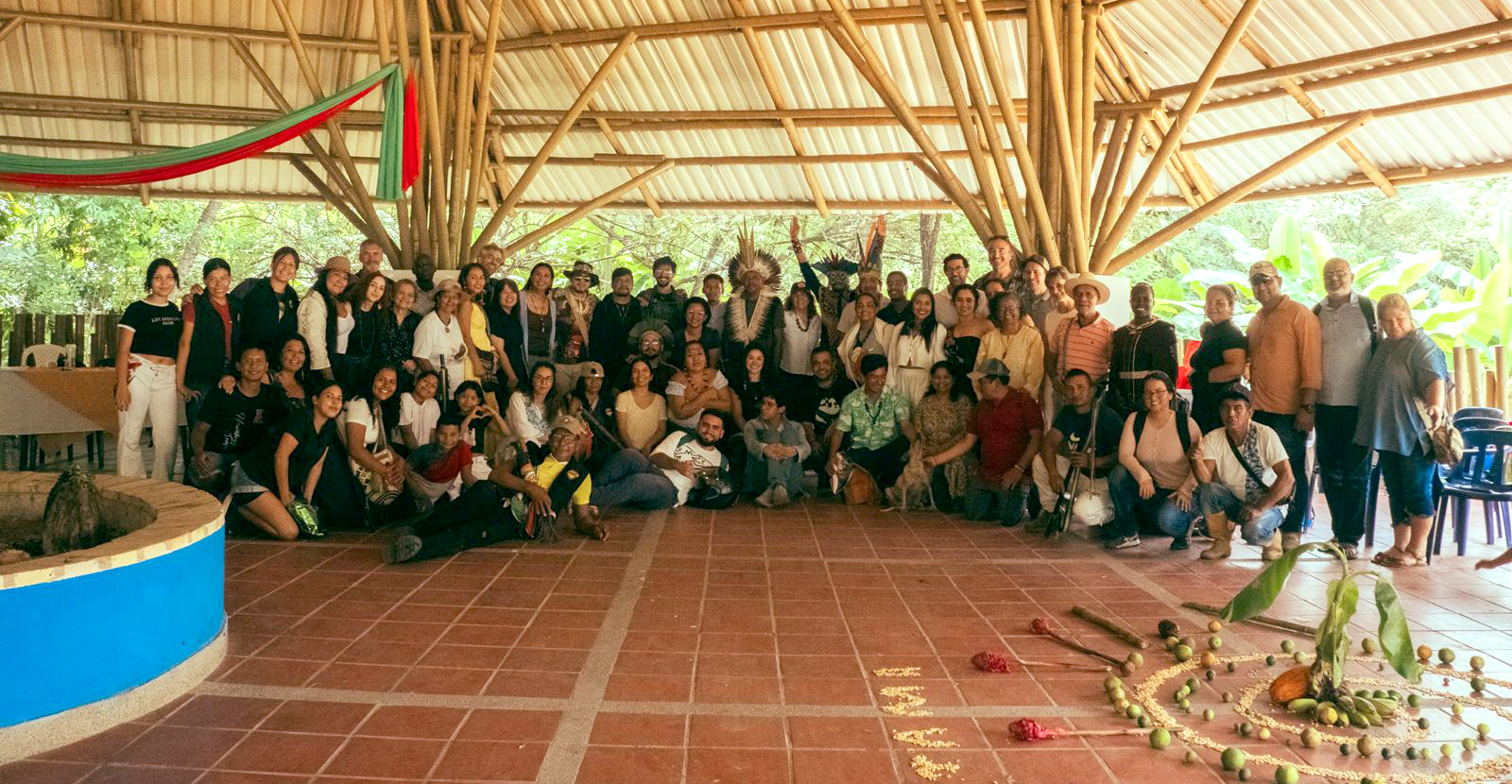
Indigenous fire stewardship was highlighted last week as communities, Indigenous leaders and researchers gathered in Colombia to share global perspectives on wildfire.
Thompson Rivers University was a co-sponsor of the event, in partnership with the Food and Agriculture Organization of the United Nations (FAO). Shannon Wagner, TRU’s vice-president research, and Quentin Nelson, associate director of training with TRU Wildfire, participated in the intercultural exchange.
The five-day workshop, held March 2 to 6 on the Resguardo Indígena Tama Páez territory near Neiva, brought together participants from many countries to exchange perspectives on fire stewardship, restoration and climate resilience.
“Our participation is part of our commitment to strengthening the intersections between Indigenous knowledge, wildfire research and sustainable practices,” said Wagner. “Being invited to co-sponsor this gathering alongside the United Nations with Indigenous knowledge holders from around the world reflects the role TRU is playing in valuing the understanding of Indigenous fire stewardship and resilient landscapes.”

Held on the Resguardo Indígena Tama Páez territory near Neiva, Colombia, the workshop included dialogue sessions, cultural exchanges and a field visit guided by members of the Tama Páez community.
The workshop included dialogue sessions, cultural exchanges and a field visit guided by members of the Tama Páez community. Participants shared how many Indigenous cultures see fire as part of their Indigenous family and as part of a living system connected to land, food systems, seasons and cultural knowledge.
Those perspectives shaped discussions about how fire stewardship can support ecosystem restoration and help communities learn to live with healthy fire on the landscape.
The gathering also produced a draft framework for an Indigenous Peoples fire knowledge module that will become part of FAO’s Global Programme on Indigenous Peoples Biocentric Restoration. The module will support future training and knowledge exchange related to biocentric restoration in fire-affected landscapes.
“This global gathering highlighted the importance of listening to diverse perspectives and knowledges about wildfire that will help communities as they bring healthy fire back to the landscape,” said Wagner. “TRU is grateful to have had the opportunity to work closely with the FAO and learn from the participants.”
More information about TRU’s wildfire research, education, innovation and training work is available at tru.ca/wildfire.
Thompson Rivers University is leading in sustainability. Learn more about TRU’s contributions to the UN Sustainable Development Goals.