
TRU researcher develops AI tool for nursing communication
Thompson Rivers University researchers are advancing the future of nursing education with a new AI-powered platform designed to strengthen one of the profession’s most essential skills: therapeutic communication.
At the centre of the project is Dr. Anila Virani in TRU’s School of Nursing, whose research explores how students build confidence and competence in patient communication. Drawing on that work, Virani developed AISimSpeak to expand practice opportunities beyond the traditional simulation lab.
The platform gives students unlimited access to real-time, voice-based conversations with virtual patients in a safe, guided environment. Learners receive immediate structured feedback and can repeat scenarios as often as needed, building confidence before entering clinical settings.
Addressing a long-standing educational gap
While simulation labs effectively support clinical decision-making, communication practice can be harder to scale. Role play and high-fidelity simulation depend on faculty availability, coordinated schedules and physical space, limiting how often students can rehearse emotionally complex conversations.
AISimSpeak shifts the focus from clinical decision-making to conversational competence, strengthening students’ ability to listen, respond and communicate in ways that build patient understanding and trust.
“Technical skills are essential,” says Virani. “But how we speak to patients is just as important. Therapeutic communication shapes the patient’s experience of care.”
The web-based, AI-powered platform functions as an interactive communication lab that students can access independently. It allows nursing students to engage in live, voice-based conversations with virtual patients, providing what traditional simulation cannot always offer: repetition without restriction.
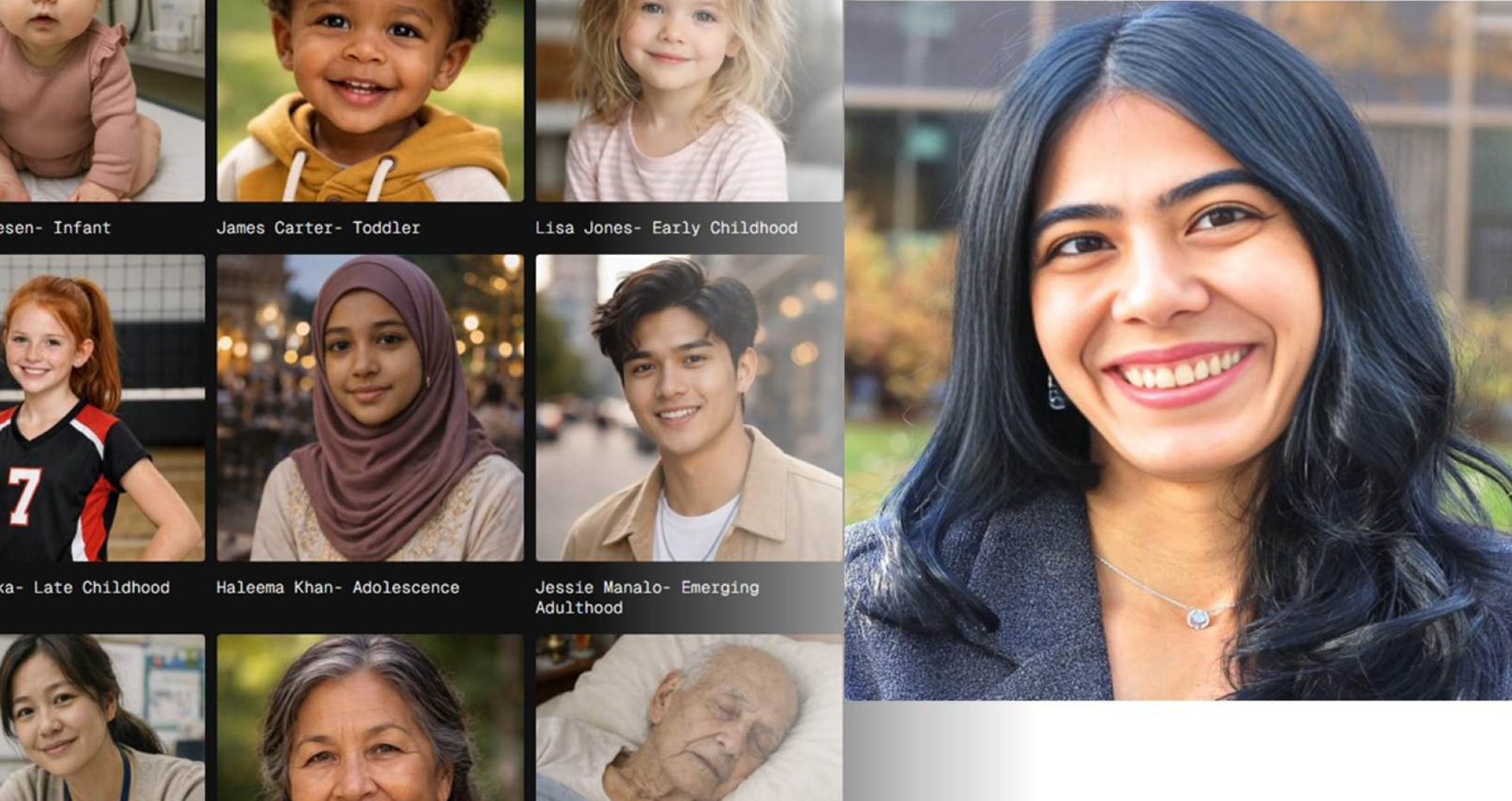
Instead of selecting responses from scripted menus, students speak naturally. The AI-generated patient listens and responds in real time, adapting to tone, wording and communication choices. Each exchange unfolds differently depending on how the conversation is handled, closely mirroring real clinical interaction.
Before beginning, students review a virtual patient profile, similar to reading a chart before entering a client’s room. After the conversation, the platform provides structured feedback and guided reflection prompts, encouraging learners to consider not only what they said, but how their words may have shaped the patient’s experience.
“Therapeutic communication is not about memorizing lines,” Virani explains. “It is about understanding how your language affects another person. Students need space to practice, reflect and try again.”
Through repeated use, learners strengthen skills such as active listening, responding to emotion, clarifying information and delivering complex information clearly, all of which are foundational competencies in nursing care.
Built through collaboration and research support
Development of the platform has unfolded in phases.
The first phase focused on designing and building AISimSpeak as a functional, research-informed learning tool. Supported by funding from the TRU Undergraduate Research Fund and the CAN Sim Innov2Learn Fund, this stage centred on refining the platform’s structure, feedback mechanisms and user experience.
The completed platform is now live and publicly accessible at aisimspeak.trubox.ca.
The second phase will involve structured user testing to better understand how students engage with the platform, which features most effectively support learning and what refinements may be needed.
A third phase will pilot implementation within TRU’s School of Nursing and at partner institutions. This stage will examine the platform’s impact on undergraduate nursing students’ learning outcomes and its usability in real academic settings.
Designed with equity in mind
From the outset, Virani intentionally designed AISimSpeak as an open-access, low-barrier academic tool.
Across Canada and globally, simulation resources are often concentrated in larger or urban institutions. Smaller, rural or remote programs may not have the same access to advanced labs or technology.
“Learning opportunities should not depend on where a student studies,” Virani says.
Because AISimSpeak does not require specialized equipment or simulation facilities, it can be integrated into programs regardless of geography or infrastructure. Students can log in independently and practise as often as needed, helping to reduce disparities in communication training across institutions.
AI as a guided learning partner
Virani emphasizes that artificial intelligence must be integrated thoughtfully within nursing education.
“When used with strong pedagogical intention, AI can expand access to practice and provide structured feedback, especially in large classes,” she says. “But it is not a replacement for human teaching.”
AISimSpeak is designed to operate within a “human in the loop” framework, where faculty guide pre-briefing and debriefing and ensure alignment with learning outcomes. Educators continue to provide ethical context, professional judgment and professional formation.
As AI becomes embedded within professional competencies, students must also build comfort and confidence using AI-supported tools. Nursing programs include learners directly from high school as well as mature students returning after years in the workforce. Clear orientation and support are essential to ensure equitable engagement.
For Virani, the goal is not technological novelty but strengthened practice.
“AI has significant potential to enhance communication training,” she says. “When integrated thoughtfully, it can support students in developing the relational skills that are foundational to nursing care.”



Thompson Rivers University is leading in sustainability. Learn more about TRU’s contributions to the UN Sustainable Development Goals.