
Researchers explore what it means to think like a chemist
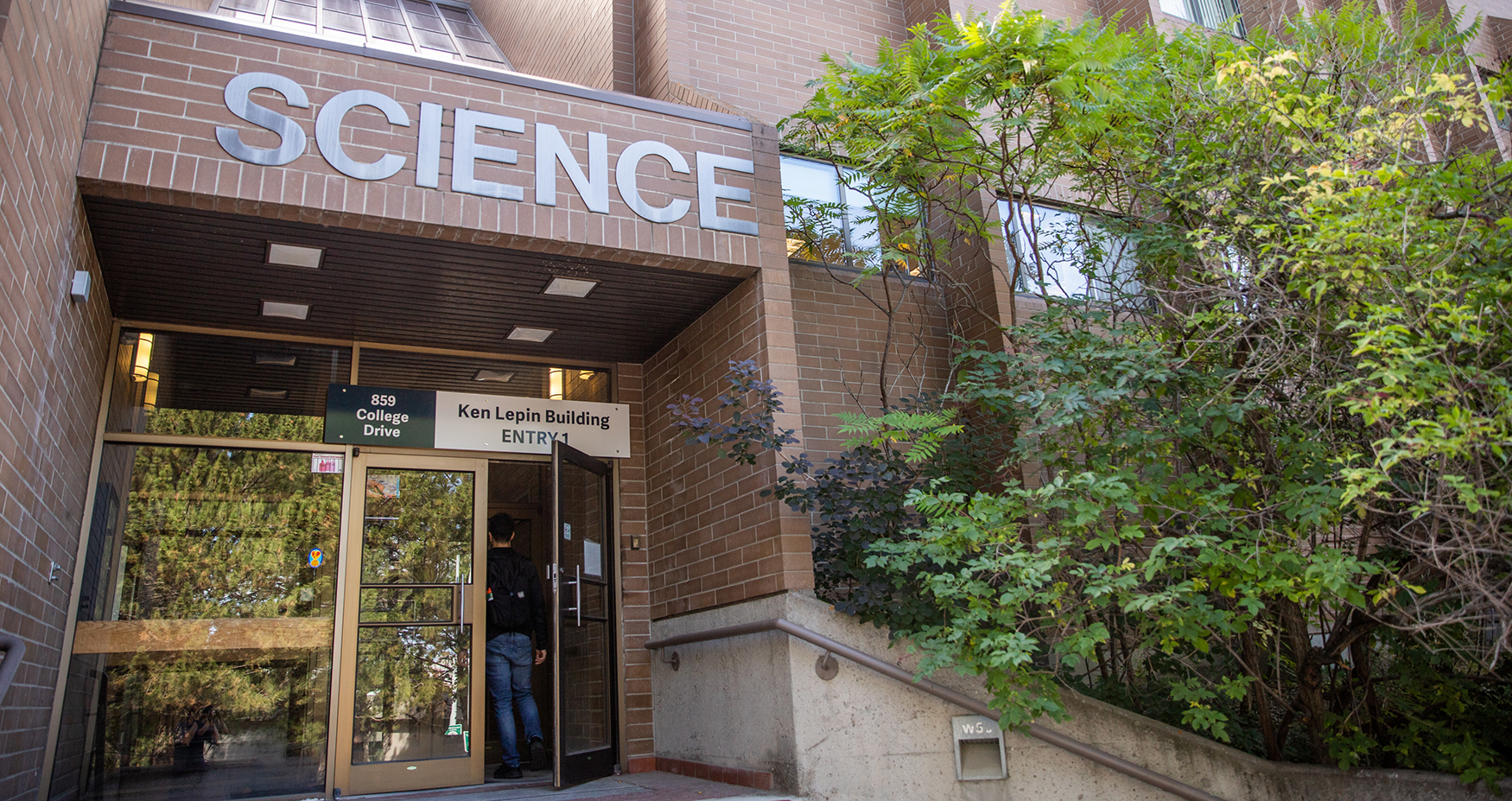
What does it mean to “think like a chemist”? That’s the question driving a new research project led by Dr. Jessica Allingham, an associate professor of chemistry at Thompson Rivers University (TRU).
Allingham, together with Dr. Alexis Brown from TRU’s Centre for Excellence in Learning and Teaching (CELT) and Dr. Brett McCollum, associate dean of science at the University of Central Florida, have received a Social Sciences and Humanities Research Council (SSHRC) Insight Development Grant for a project titled “Transforming NMR Education: Enhancing Representational Competency, Inclusivity, and Pedagogical Strategies in Organic Chemistry.”
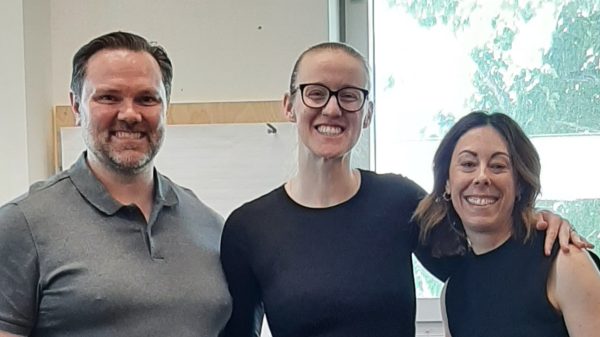
Pictured left to right: Drs. Brett McCollum, associate dean of science at the University of Central Florida, Jessica Allingham, associate professor of chemistry at TRU and Alexis Brown, coordinator at TRU’s Centre for Excellence in Learning and Teaching (CELT).
The project grew out of TRU’s Scholarship of Teaching and Learning (SoTL) Scholars Program and focuses on helping students develop “representational competency” — the ability to move between different ways of showing and interpreting information, such as diagrams, graphs, symbols, models and specialized language. In organic chemistry, this skill is essential for mastering Nuclear Magnetic Resonance (NMR) spectroscopy, a key technique used to identify molecular structures.
“For experts, analyzing NMR data is second nature,” says Allingham. “For students, it can feel overwhelming. Our research looks at how novices and experts approach the same problems, and what teaching strategies can help students bridge that gap.”
The team’s work will examine how learners describe and interpret chemical representations, where they encounter barriers, and how teaching practices can better support their progress. Their findings will not only advance theory in chemistry education but also provide practical tools for faculty designing courses that reduce barriers and build confidence in organic chemistry.
“Ultimately, this work is about equipping students with the skills and confidence to engage fully in the discipline of chemistry,” says Allingham.
The researchers credit TRU’s Research Office and CELT for their support in making the collaboration possible. Their work highlights the value of interdisciplinary approaches to improving teaching and learning, and the impact research can have on transforming classroom practices.