
Supreme Court of Canada cites TRU law faculty member – TRU Newsroom
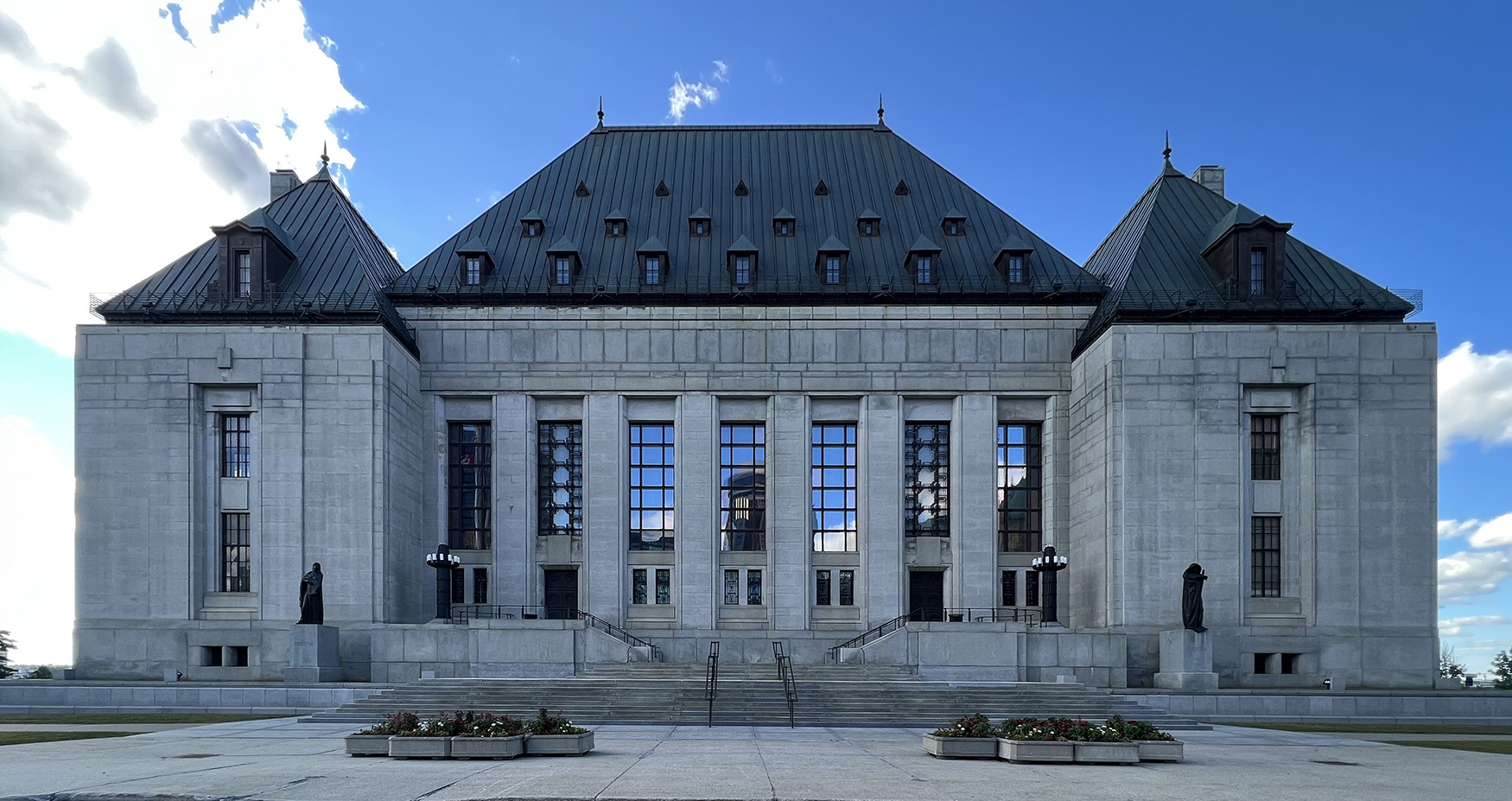
The Supreme Court of Canada recently ruled on an appeal dealing with the question of whether the Canadian Charter of Rights and Freedoms applies to Ontario public school boards. Mark Mancini, assistant professor in the Faculty of Law at Thompson Rivers University (TRU), was one of the authors cited in the court’s decision to dismiss the school board’s appeal.
In York Region District School Board v. Elementary Teachers’ Federation of Ontario, the teachers’ union filed a grievance on behalf of two teachers, claiming their right to privacy at work was violated, but both the appointed labour arbitrator and the Divisional Court that reviewed the arbitrator’s decision dismissed the grievance. In its decision, the Divisional Court brought up the question of whether the Charter applies, saying that an employee does not have the right under section 8 of the Charter to be secure against unreasonable search or seizure in a workplace environment.
Mark Mancini, assistant professor, TRU Law
The union then appealed to the Ontario Court of Appeal, which overturned the arbitrator’s decision and held that the Divisional Court made a mistake in concluding the Charter did not apply.
In the appeal to the Supreme Court of Canada by the school board, the Supreme Court upheld the Ontario Court of Appeal’s decision. Citing Mancini’s article, “The Conceptual Gap Between Doré and Vavilov” (2020) 43 Dalhousie LJ 793, the Supreme Court ruled that when administrative decision-makers — such as a landlord tenant board, a labour arbitrator, or a human rights tribunal — make a decision impacting Charter rights, they must get it right.
“Courts will hold these decision-makers to a high standard when interpreting and applying Charter rights,” says Mancini, whose research interests include administrative law, the law of judicial review and legislative interpretation. “This is the standard of ‘correctness’ — the decision-makers must be correct.”
The Supreme Court agreed that Ontario public school board teachers are protected from unreasonable search and seizure in the workplace under the Charter. Applying the correctness standard, the Supreme Court also found the arbitrator erred by not considering Charter rights alongside the arbitral framework.
“The Court’s insistence that Charter rights be correctly interpreted reflects its desire to ensure that teachers are protected against unreasonable search and seizure in their own workplaces, by their own superiors,” says Mancini.