
Home-grown solutions for tackling housing gaps – TRU Newsroom
Cheryl Gladu, TRU’s first Researcher-in-Residence and current assistant professor with the Bob Gaglardi School of Business and Economics
Inspiration can come from anywhere during the planning phase of a research project. Some find their focus in exploring timely issues, filling literature gaps or informing decision makers and policy.
For MBA student and Researcher-in-Residence (RiR) intern Tana Dagneau-Jones, inspiration came in the form of a spreadsheet —more specifically, a spreadsheet of issues identified by City of Kamloops staff as areas to explore with respect to local housing decisions and policy.
Dagneau-Jones’ work now explores the missing middle housing, or whether higher density, infill development ranging from duplexes to live-work setups has potential to meet resident demand more effectively than single-family homes — and how it may help fill housing gaps in Kamloops.
From fire codes to panhandle lots
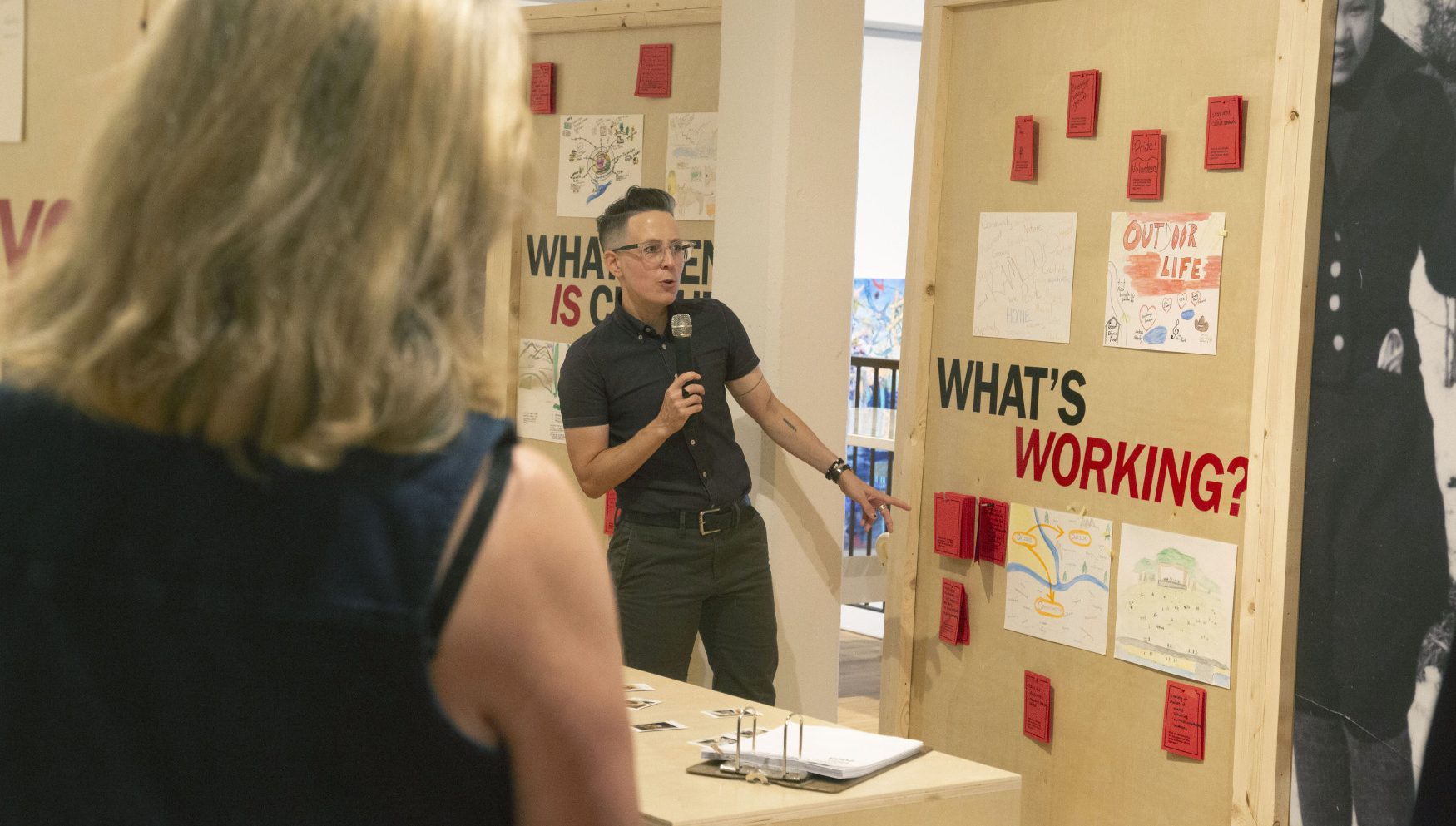
MBA student and Researcher-in-Residence Tana Dagneau-Jones
“The goal of this missing middle research project was very much rooted in addressing real-world problems and hearing the conversations that happened around these real-world problems in a practical setting,” Dagneau-Jones says. “It helped the research become more engaging.”
The Researcher-in-Residence program was launched by Thompson Rivers University (TRU) and the City of Kamloops in 2021. It gave Dagneau-Jones access to asking questions at monthly meetings with city officials who are intimately familiar with local housing issues.
She ultimately spent two years collaboratively exploring factors affecting housing options in the city, from fire codes to panhandle lots.
Real questions for real benefits
TRU’s first Researcher-in-Residence, Cheryl Gladu, is now an assistant professor with the Bob Gaglardi School of Business and Economics. She says this approach to research benefits the researcher and the research outcomes.
“If you come at a project like this stating, ‘I’m a researcher and these are my findings,’ you lose the opportunity to learn from other people about the questions you should be asking,” says Gladu.
“City of Kamloops staff have a great deal of expertise. When we co-create questions, we can do a better job helping them with their job, and they help us with ours, because we’re meant to tackle real questions that will have real benefits to the community.”
Gladu has worked with TRU students from different disciplines, including social work and nursing, on issues such as stigma around homelessness.
Making a positive change through research
As in many Canadian cities, housing insecurity in Kamloops is a growing issue.
Recent data from British Columbia’s Ministry of Social Development and Poverty Reduction suggests the number of people in Kamloops with no fixed address rose from 285 in 2019 to 479 in 2023 — an increase of 68 per cent.
Gladu has hopes that community research projects and programs like the RiR pilot project will benefit city planning. Long-term, she hopes the collaboration will expand people’s understanding of the role of researchers in the development of cities and communities.
“It’s easy to critique policy if it doesn’t have the outcome you hope for, and that can happen with planning: It’s a live experiment that shapes our experience 20 years later,” says Gladu. “Part of Tana’s work is to help clarify and articulate why misalignments lead to problems.”
Dagneau-Jones says the RiR experience has inspired her to consider a career in academia and that she plans to continue researching the Missing Middle. As such, she’s shifted from the course-based MBA option to pursuing a thesis. She is now in the finalization phase which includes interviewing local housing market experts across three industries to explore local barriers to housing development. Next, she will defend her thesis.
“I’ve always been interested in practical problem-solving, and this project changed my understanding of what research is,” says Dagneau-Jones. “You can make real positive change, and that’s something I want to continue to pursue.”